Exclusive analysis on Google’s rumored “Project Castor” Discover how micro-LED retinal projection could kill the traditional smartphone display by 2027.

Lets Understand in short:
Look at the smartphone in your hand. Whether it is a $300 budget device or a $1,800 folding behemoth, it relies on the exact same fundamental concept we’ve been using since 2007: a glowing rectangle of glass that you poke with your fingers.
As a hardware analyst, I spend my days looking at spec sheets, and I can tell you a secret the industry doesn’t want to admit: The traditional smartphone display has peaked. We’ve pushed OLED and AMOLED technology to its absolute thermal and battery limits.
I am Ameer Hamza, and over the past few weeks, whispers from the Asian supply chain and deep-dive patent filings have pointed toward a massive pivot at Google’s hardware division. It’s internally dubbed “Project Castor,” and if the leaks are accurate, Google isn’t trying to build a better smartphone screen for 2027. They are trying to eliminate the screen entirely.
Here is the deep-dive technical breakdown of the technology that could make your current flagship look like an ancient relic in less than two years.
What is Project Castor? The Death of the Heavy Glass Rectangle
For the last three years, the industry has been distracted by clunky VR headsets. Apple released the massively heavy Vision Pro, and Meta has been iterating on its Orion AR glasses. But Google has been suspiciously quiet since its early Project Astra demos.
According to recent supply chain murmurs out of TSMC and display manufacturers in South Korea, Project Castor is the reason why. Google has realized that consumers do not want to wear heavy computers on their faces. Instead, Castor envisions a two-part ecosystem:
- The Compute Hub: A screenless (or minimally screened) device that sits in your pocket, housing the battery, 5G/6G modems, and a next-generation Tensor processor.
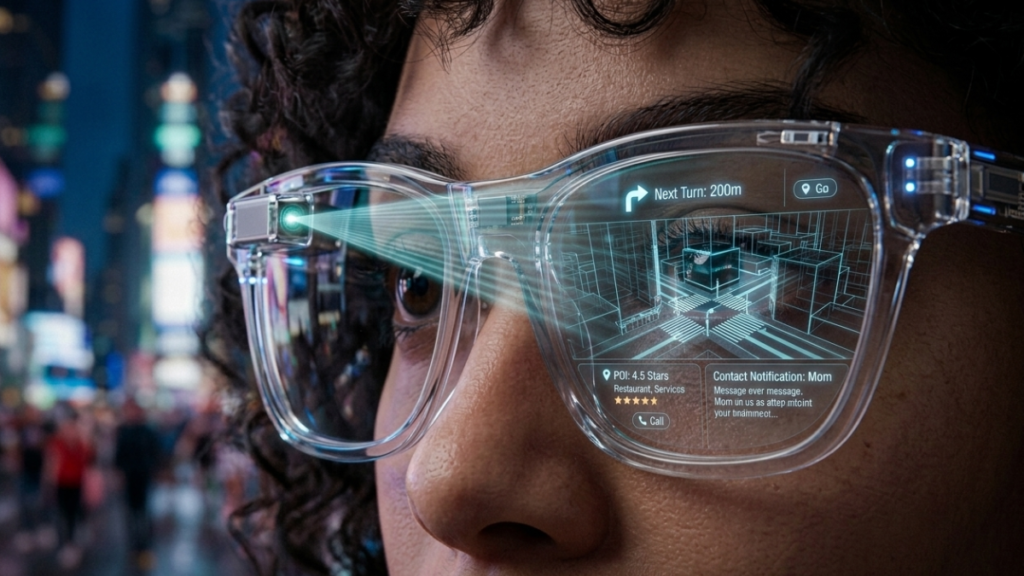
- The Projection Wearable: A pair of lightweight, normal-looking glasses that use Micro-LED Retinal Projection.

It’s that second part that changes absolutely everything.
The Physics of Retinal Projection (How it Works)
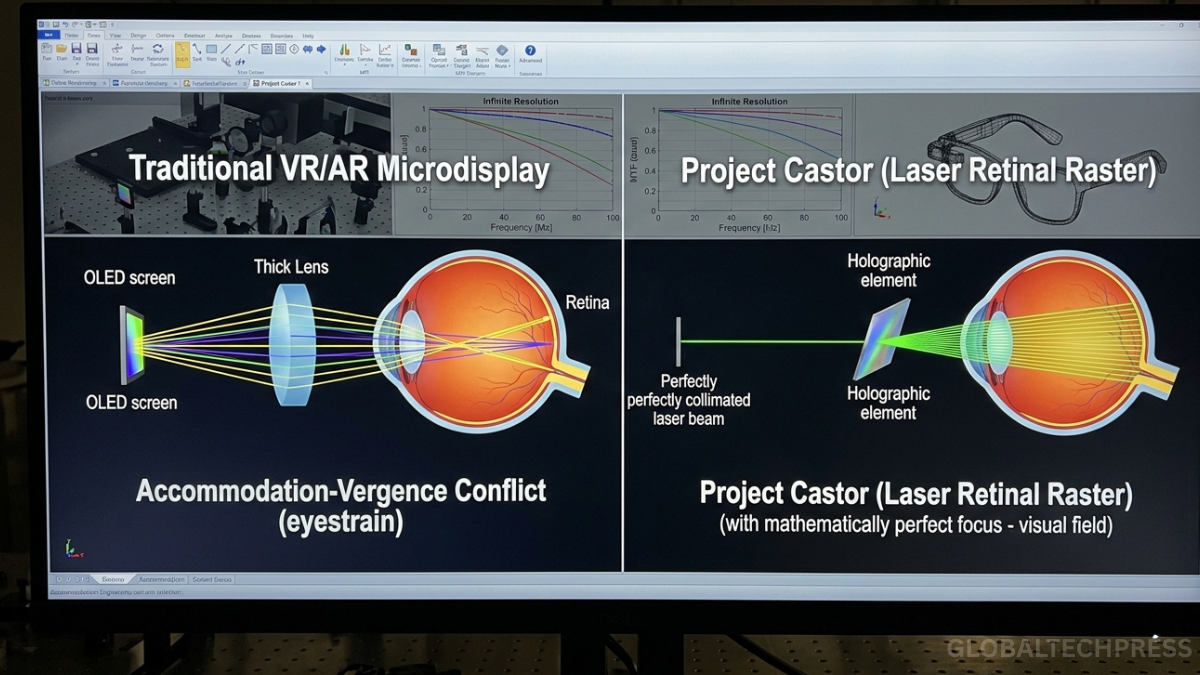
Normally, a display emits light outward, and your eye focuses on that glowing surface. Retinal projection bypasses the “surface” entirely. Instead of putting a tiny OLED screen in front of your eye (which causes eye strain and requires heavy lenses to focus), Project Castor reportedly uses microscopic, ultra-low-power lasers and micro-LEDs built into the frame of the glasses.
These lasers bounce harmless light off a holographic waveguide built into the lens, reflecting the image directly onto the retina at the back of your eye.
The Technical Advantages:
- Infinite Resolution: Because the image is painted directly onto your optical nerve, there are no “pixels.” The resolution is limited only by human biology, effectively giving you an 8K display overlaying the real world.
- Zero Glare: You can use it in the brightest summer sun, and the image won’t wash out, because the light isn’t competing with the sun on a piece of glass; it’s inside your eye.
- Massive Battery Savings: Powering a 6.8-inch AMOLED screen at 120Hz consumes about 60% of your phone’s battery life. Bouncing a low-power laser onto your retina uses a fraction of a watt.
Why Google is Positioned to Win This Battle
You might be asking, “Why Google and not Apple?” The answer lies in the silicon and the software ecosystem.
To make retinal projection work, you need flawless, zero-latency artificial intelligence to map the real world and place digital objects seamlessly into your field of view. Google currently has the most advanced multimodal AI models on the planet.
Furthermore, the rumored Tensor G6 chip (slated for late 2026/early 2027) is reportedly heavily optimized for continuous spatial computing and sensor fusion, moving away from traditional smartphone graphics rendering. If Google can offload the heavy AI processing to the “pocket hub” and use the glasses purely as a dumb projection terminal, they solve the thermal throttling issues that have plagued every AR headset to date.
Personal Review & thoughts:
As much as I love futurism, my job is to ground these rumors in engineering reality. Will we all throw away our Galaxy S26 Ultras and iPhone 17s next year? Absolutely not.
The transition away from the smartphone screen will be brutal, and Project Castor faces massive hurdles:
- The Privacy Nightmare: A device that constantly maps your environment to project context-aware data into your eye is a privacy disaster waiting to happen. Google will have to process all visual data entirely on-device to avoid regulatory bans.
- The “Glasshole” Stigma: Google tried this over a decade ago with Google Glass and failed spectacularly because society wasn’t ready.
- Typing and Input: How do you type a 500-word email on a screen that only exists in your eye? Neural wristbands (like the ones Meta is developing) or advanced air-gestures will be required, and that technology is still in its infancy.
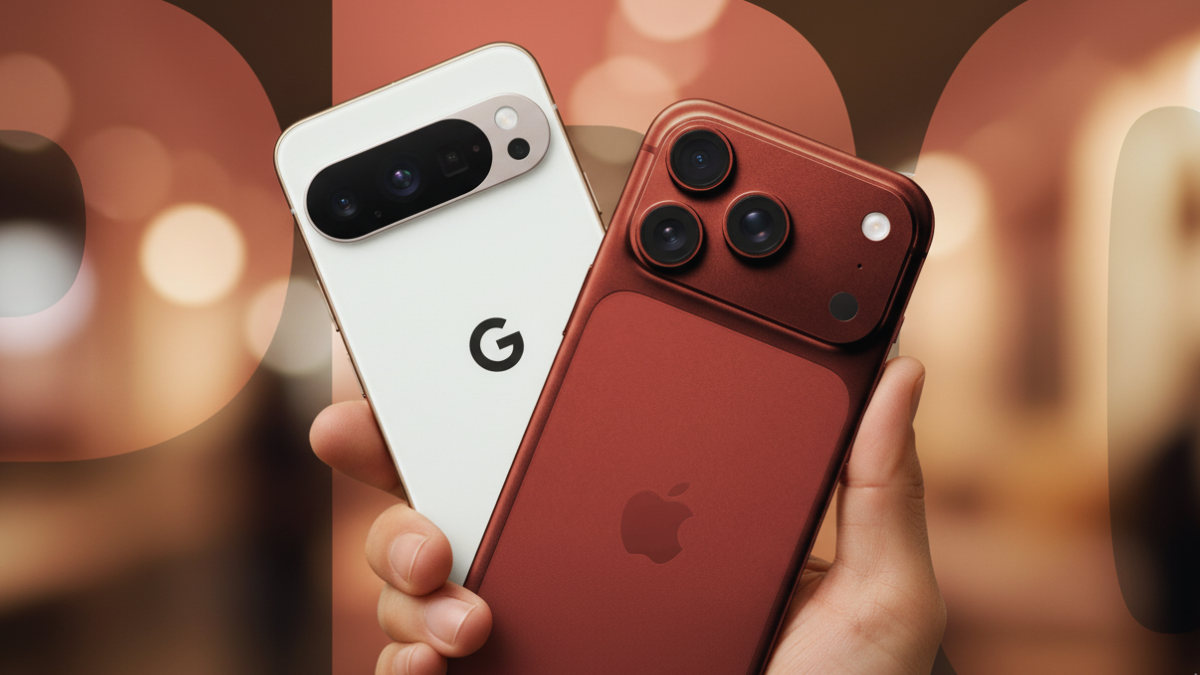
Verdict: Prepare for the Hybrid Era
Project Castor is not a 2026 consumer product. It is Google’s moonshot for late 2027 or 2028. However, the leaks tell us exactly where the R&D billions are flowing.
The era of the “Mega-Screen Flagship” is drawing to a close. Over the next two years, we will see phones get smaller, folding phones become the norm, and “Companion Wearables” take center stage.
If you are a tech enthusiast, stop stressing over whether your next phone has a 120Hz or 144Hz refresh rate. The real revolution is happening off-screen. Google is quietly preparing to turn your own biology into the ultimate display, and when Castor finally drops, the smartphone as we know it will become a museum piece.