The era of the “chatbot” is officially dead. If your smartphone in 2026 only knows how to answer trivia questions or write a generic email, you are holding a fossil. We have officially entered the era of Agentic AI — artificial intelligence that doesn’t just talk to you, but actively does things for you across multiple apps without requiring constant permission.

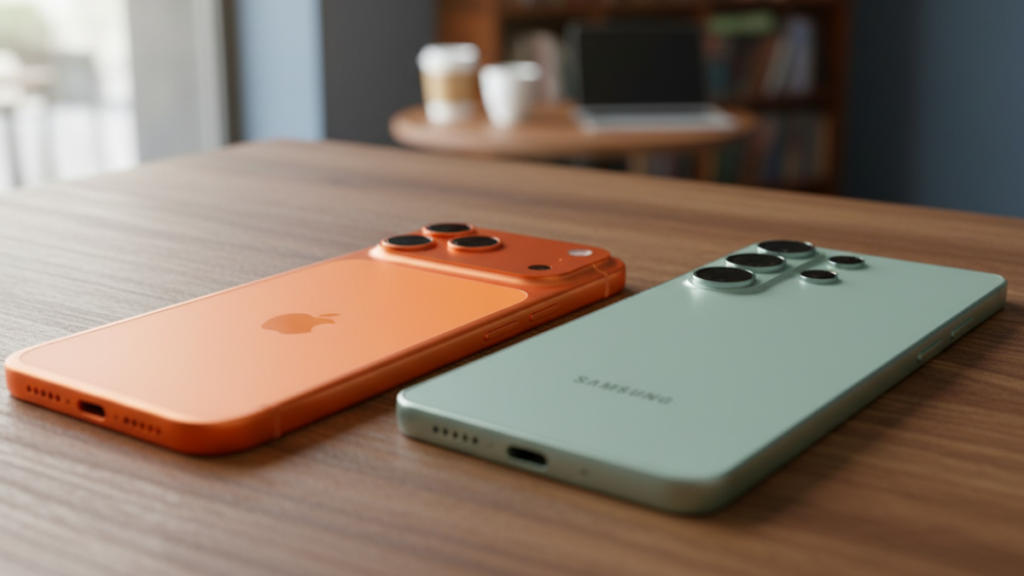
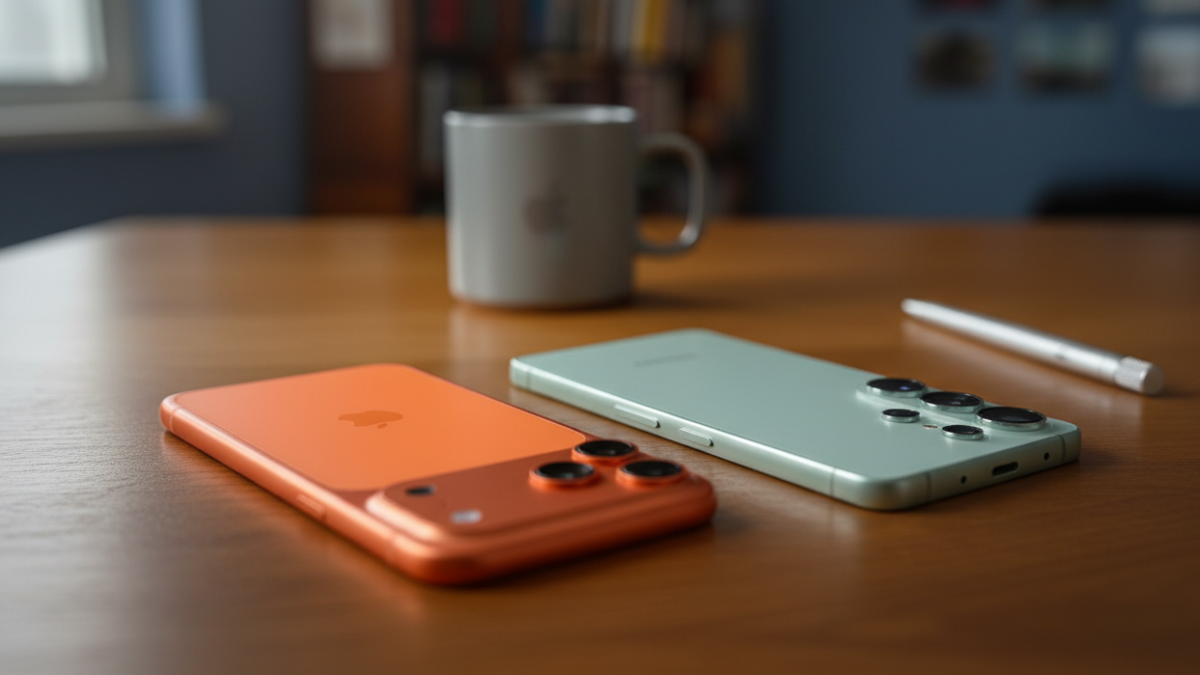
I am Ameer Hamza, and for the past 24 hours, I put my own life in the digital hands of the two biggest tech giants on the planet. I locked my laptop away, placed the Samsung Galaxy S26 Ultra and the iPhone 17 Pro Max on my desk, and attempted to run my entire workday, schedule, and evening plans using only their respective AI agents: Samsung’s newly minted “Galaxy Agent” and Apple’s highly anticipated “Apple Intelligence 2.0” (powered by Siri Pro).
The results completely shattered my expectations about where mobile technology is heading. Here is the unfiltered truth about which AI can actually run your life.
The Morning Rush: Context is King
The test began at 7:00 AM. My prompt to both devices was identical: “Summarize my overnight emails, tell me if any meetings moved, and order my usual coffee from the shop down the street.”
Apple Intelligence 2.0 (iPhone 17 Pro Max): Apple’s approach relies heavily on its upgraded 16-core Neural Engine and tight ecosystem integration. Siri Pro instantly scanned my Apple Mail and Apple Calendar. It gave me a flawless, conversational summary of three important emails and noted that my 10:00 AM meeting had been pushed to 11:00 AM.
However, when it came to the coffee, Apple hit a wall. Because of Apple’s strict “App Intents” framework and privacy sandboxing, Siri Pro could only open the Starbucks app and pre-fill the order. I still had to physically tap “Confirm Payment.”

Samsung Galaxy Agent (Galaxy S26 Ultra): Powered by the Snapdragon 8 Elite Gen 5’s massive NPU, Samsung took a terrifyingly autonomous approach. The Galaxy Agent read my Gmail and Google Calendar, gave a slightly more robotic summary than Apple, but then did something incredible.
It didn’t just open the coffee app; it used screen-awareness technology to virtually “tap” the buttons in the background. It placed the order, used Samsung Pay, and simply gave me a notification saying: “Your Americano will be ready at 7:24 AM.” No extra taps required.
Winner: Samsung. When it comes to true “Agentic” behavior, Samsung is willing to take the training wheels off.
The Midday Crisis: Handling Complex Data
At 1:00 PM, I needed to review a 45-page PDF report regarding smartphone market shares, extract the data regarding European sales, and draft an email to my editor with a bulleted summary.
Apple Intelligence 2.0: This is where Apple’s Private Cloud Compute flexed its muscles. I dropped the PDF into the Notes app and asked Siri Pro to handle it. Within eight seconds, it produced a beautifully formatted, highly accurate summary of the European data.
The tone of the drafted email was natural, professional, and sounded exactly like something I would write. Apple’s Large Language Model (LLM) processing is undeniably superior when it comes to understanding nuance and generating human-like text.
Samsung Galaxy Agent: Samsung struggled slightly with the nuance. While the Galaxy Agent successfully extracted the data using its on-device LLM, the resulting email draft was stiff and heavily relied on corporate jargon. I had to spend two minutes manually editing the text before sending it. Furthermore, the Galaxy S26 Ultra got noticeably warm during this heavy processing task, whereas the iPhone remained cool to the touch.
Winner: Apple. For pure text generation, comprehension, and thermal efficiency, Apple Intelligence 2.0 remains the gold standard for professional communication.
The Evening Challenge: Multi-App Navigation
By 6:00 PM, I needed to book a dinner reservation for two in downtown, check the traffic, and calculate what time I needed to call an Uber. This requires the AI to connect three completely different data points: OpenTable, Google Maps, and Uber.
Samsung Galaxy Agent: I gave the command, and the Samsung device went into overdrive. The Agentic AI cross-referenced traffic data, found an open table at 7:30 PM at an Italian restaurant I had previously searched for, booked it, and set a silent alarm for 6:45 PM to trigger the Uber app.
It executed a multi-step, multi-app workflow flawlessly. It felt like having a human executive assistant.
Apple Intelligence 2.0: Siri Pro managed to find the restaurant and book the table via its deep integration with OpenTable. It also told me the traffic conditions. However, it could not proactively schedule the Uber for a future time based on that traffic data.
It simply reminded me, “You should leave by 6:45 PM.” Again, Apple’s strict privacy walls prevented the AI from making autonomous decisions across third-party apps without my explicit, real-time permission.
Winner: Samsung. For complex, multi-variable tasks, the Galaxy Agent is simply less restricted.
Privacy vs. Utility: The Ultimate Trade-Off
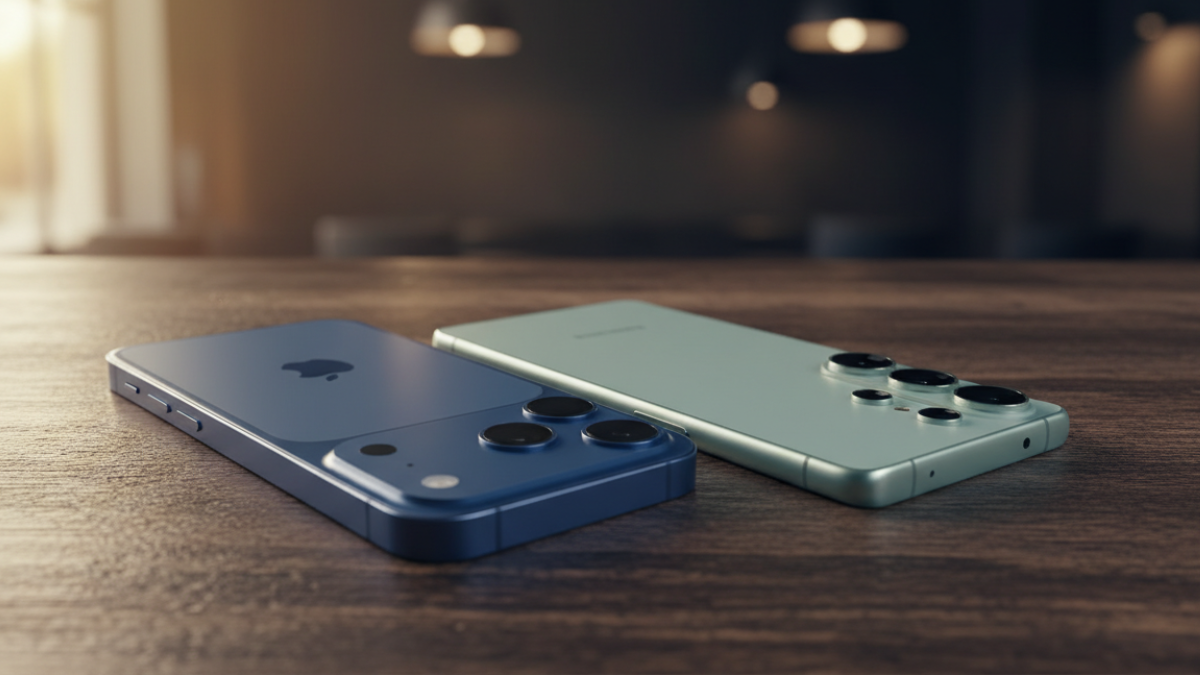
This 24-hour test revealed the core philosophical difference between these two tech giants in 2026.
Apple’s Apple Intelligence 2.0 is built on a foundation of absolute privacy. It is an incredibly smart, highly capable assistant, but it is ultimately submissive. It requires your permission to act, and it silos your data to protect you.
Samsung’s Galaxy Agent is built for pure utility. It acts like an autonomous worker. It reads your screen, jumps between your apps, and spends your money to save you time. It is objectively more “Agentic,” but that level of access requires you to surrender a massive amount of trust to Samsung’s Knox security framework.
Ameer Hamza’s Final Thoughts
If you view your smartphone as a secure vault for your personal life and you mostly use AI to rewrite emails, summarize notes, and check your schedule, the iPhone 17 Pro Max with Apple Intelligence 2.0 is the most polished, secure experience on the market.
But if you want a phone that actually takes work off your plate — a device that will book your flights, order your food, and navigate your apps while you focus on other things — the Samsung Galaxy S26 Ultra is the undisputed king of Agentic AI. Samsung has taken the risk of letting the AI drive, and for power users, that risk has absolutely paid off.