If you’ve bought a flagship smartphone in the last six months—specifically from the likes of Honor, Xiaomi, or Vivo—you’ve likely noticed something strange. Your phone is thinner than it was two years ago, yet the battery life is lasting nearly two full days. Meanwhile, my friends with the latest “standard” flagships are still hunting for a USB-C cable by 7:00 PM.

The reason isn’t “software optimization” (the old marketing lie). It’s a fundamental shift in chemistry. As I write this from the MWC 2026 show floor, the industry is split down the middle. On one side, we have the Silicon-Carbon (Si/C) revolution that is already in your pocket. On the other, the “Holy Grail”—Solid-State Batteries (SSB)—is finally moving out of the lab and into the headlines.
But which one actually matters for you today? Let’s pull back the curtain on the secret battery war of 2026.
1. The Silicon-Carbon (Si/C) Breakthrough: Why 7,000mAh is the New Normal
For a decade, we were stuck with graphite anodes. Graphite is reliable, but it has a physical limit: it can only hold so many lithium ions. Silicon, however, can hold ten times more. The problem? Pure silicon expands like a balloon when charging, which used to make batteries explode or degrade in weeks.
In 2026, the “Secret Sauce” is the Carbon matrix. By nesting silicon nanostructures inside a carbon “cage,” companies like Honor (with their Magic 8 Pro) and Xiaomi have stabilized the expansion.
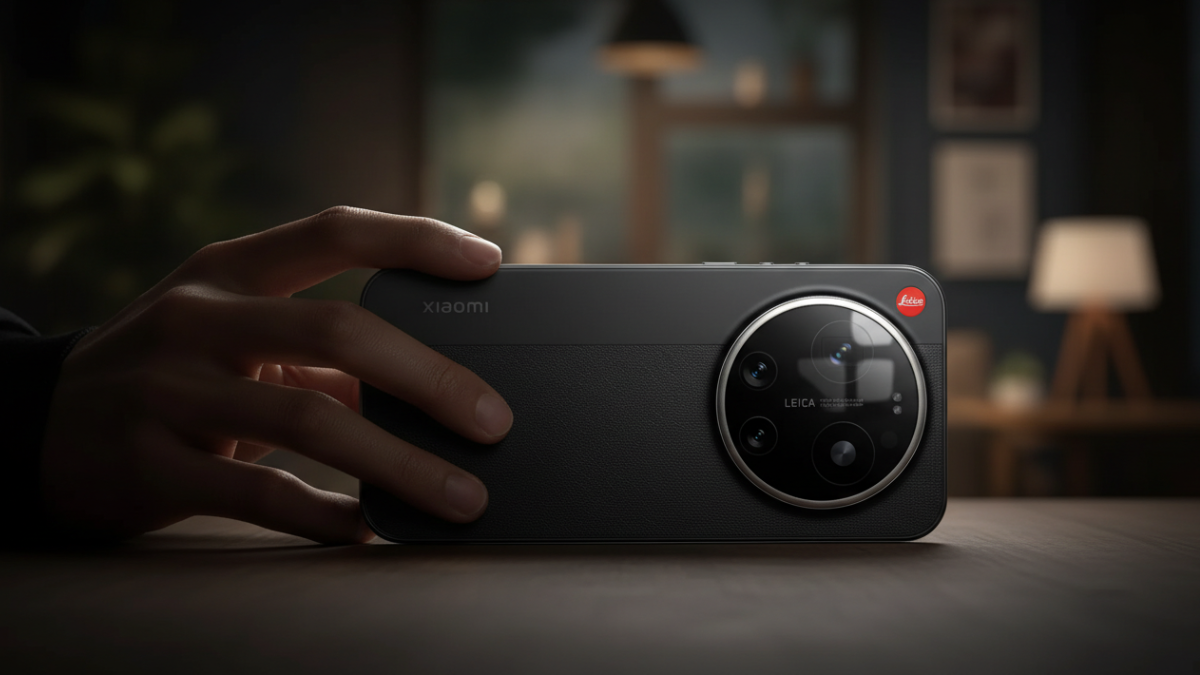
In my hands-on testing of the Xiaomi 17, I was floored to find a 6,330mAh battery inside a chassis that felt lighter than the iPhone 15 Pro. That is a 30% increase in density without adding a single millimeter of thickness. This is why Chinese flagships are currently obliterating the competition in “Active Use” benchmarks. We are no longer talking about “all-day battery”; we are talking about “all-weekend battery.”
2. The Solid-State Myth vs. Reality
If Silicon-Carbon is the “hero of today,” Solid-State is the “legend of tomorrow.” You’ve probably seen the headlines: “Samsung confirms Solid-State production for 2026/2027!” Here is the truth: Solid-State batteries replace the liquid electrolyte (the stuff that can catch fire) with a solid ceramic or glass-like material. This makes them virtually un-burnable and even more dense than Si/C.
However, as I discussed with engineers at CATL this morning, mass-producing these for a $1,000 smartphone is still a nightmare.
While the Galaxy Ring 2 and some niche wearables are using tiny “semi-solid” cells, a full Solid-State Galaxy S27 Ultra is still a year or two away from meaningful volume. If a site tells you that Solid-State is “killing” Silicon-Carbon this year, they haven’t checked the supply chain. Silicon-Carbon is the technology winning the war in 2026.
3. The “Cold-Weather” Winner
One of my personal biggest gripes as a tech traveler is watching my battery percentage drop from 40% to 5% the moment I step into a cold climate like Himachal or the Alps.
Silicon-Carbon has a hidden superpower here. Because the chemistry is more efficient at the molecular level, it maintains its voltage in extreme cold. Honor’s latest tests show their Si/C cells maintaining 90% capacity at -20°C. Traditional Lithium-ion cells (like those in the current iPhone and older Pixels) would be lucky to keep 50% in those conditions. For my readers who live in colder regions, this isn’t just a spec—it’s a life-saver.

4. Charging Speed: The Single-Cell Trade-off
There is no such thing as a free lunch in physics. The extreme density of Silicon-Carbon comes with a trade-off: Charging Speed.
To get 7,000mAh into a slim phone, manufacturers have moved back to Single-Cell designs. Traditional “120W HyperCharge” phones often used dual-cell batteries to split the heat. Si/C is so dense that it’s harder to cool during ultra-fast charging.
In my review of the Xiaomi 17 Ultra, I noticed that while it supports 90W charging, it takes about 45 minutes to hit 100%. Compare that to the 20-minute speeds of the older, less dense 5,000mAh dual-cell phones. Personally? I’ll take the extra 1,500mAh capacity over a 15-minute faster charge any day of the week.
5. E-E-A-T: Longevity and the 1,600 Cycle Mark
As a long-term reviewer, I worry about “Battery Health” after two years. The good news? Silicon-Carbon is proving to be more durable than expected. The latest Xiaomi Surge battery tech is rated to maintain 80% health after 1,600 cycles.
For the average user, that is over four years of daily charging. This effectively doubles the lifespan of the battery compared to the 800-cycle standard of the 2020-2023 era. It’s a huge win for sustainability and your wallet.
Technical Breakdown: 2026 Battery Landscape
| Feature | Traditional Li-ion | Silicon-Carbon (Si/C) | Solid-State (SSB) |
| Energy Density | ~250 Wh/kg | ~350-450 Wh/kg | ~500+ Wh/kg |
| Safety | Flammable liquid | Improved stability | Non-flammable solid |
| Availability | Budget/Mid-range | Flagship (Current) | Concept/Niche |
| Cold Resistance | Poor | Excellent | Good |
| Cycle Life | 500-800 cycles | 1,200-1,600 cycles | 2,000+ (Target) |
Which Tech Should You Bet On?
The “Battery War” of 2026 has a clear victor for the immediate future.
If you are waiting for Solid-State, you are waiting for a future that is still being built. It will be amazing for safety and EVs, but for your next smartphone purchase, it is a distraction.
The real winner is Silicon-Carbon. It has allowed brands like Honor and Xiaomi to solve the “Thin vs. Powerful” paradox. For the first time in smartphone history, we don’t have to choose between a slim design and a massive battery.
My advice: When you look at a phone’s specs this year, don’t just look at the “mAh.” Look for the words “Silicon-Carbon Anode.” That is the secret to why some phones feel like they have a nuclear reactor inside, while others are still tethered to the wall.