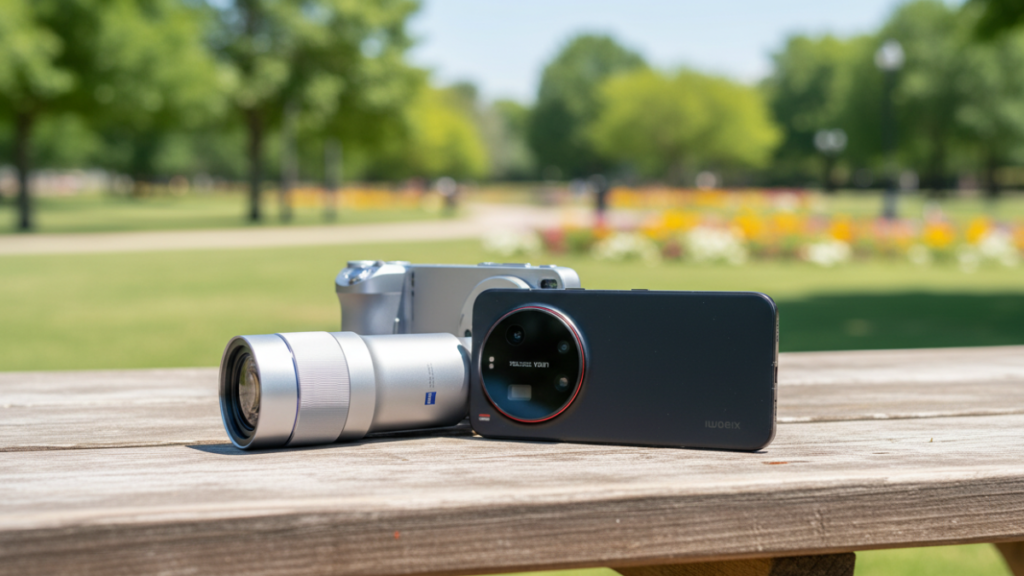

If you’ve spent any time on tech Twitter or Reddit this week, you’ve seen the screenshots. The Snapdragon 8 Elite Gen 5 inside the new Samsung Galaxy S26 Ultra is putting up numbers that would make a 2024 MacBook Pro sweat. We are talking Geekbench multi-core scores north of 12,000 and AnTuTu runs that break the 3.5 million mark.

Quick Introduction:
On paper, Qualcomm has finally achieved the impossible: they’ve built a mobile chip that is faster than Apple’s best. But as a reviewer who actually lives with these devices, I have to ask: How long can that speed actually last?
I’m Ameer Hamza, and I’ve spent the last 48 hours running thermal stress tests on the Galaxy S26 Ultra and the iPhone 17 Pro Max. What I discovered is a phenomenon I’m calling the “2nm Thermal Trap.” While the marketing focuses on the incredible density of these new transistors, nobody is talking about what happens when you try to vent that heat out of a glass-and-metal sandwich.
The Sprint vs. The Marathon
To understand the results, you have to understand the philosophy of these two chips.
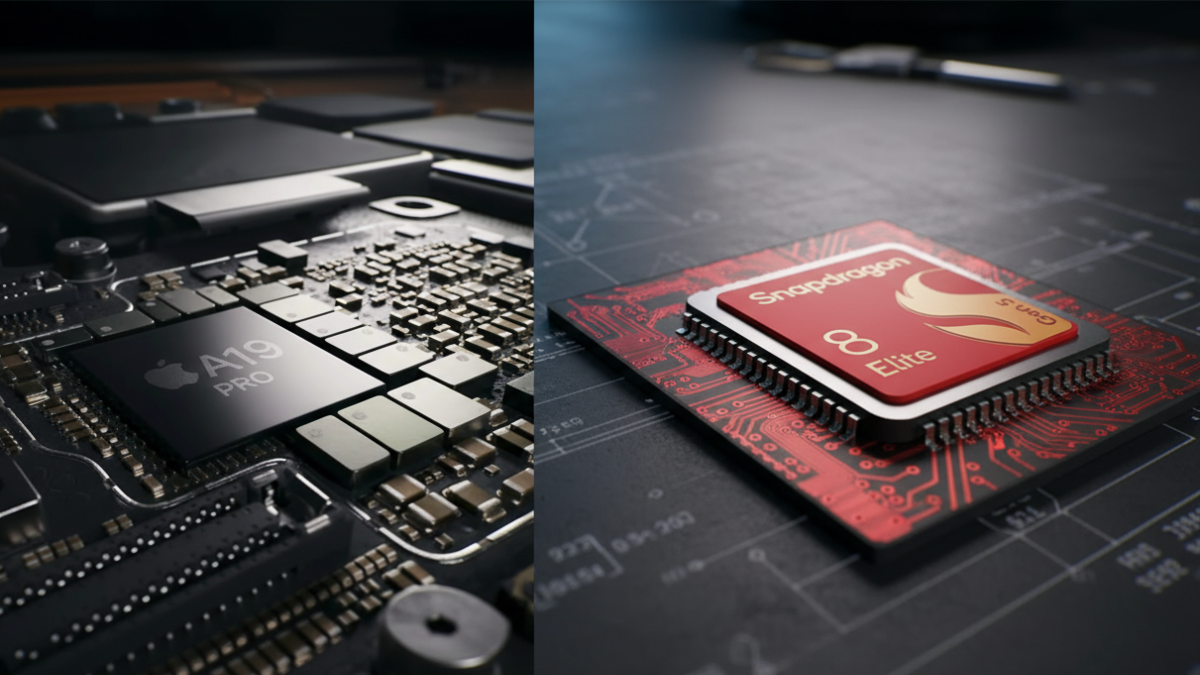
The Snapdragon 8 Elite Gen 5 is a brute-force masterpiece. Qualcomm has pushed its 3rd-gen Oryon cores to a blistering 4.6GHz. In a short, 3-minute benchmark like Geekbench, it is untouchable. It opens apps faster, renders short 4K clips quicker, and feels like lightning.

The Apple A19 Pro, by comparison, looks “safe.” Apple is keeping its performance cores at a more modest 4.26GHz. In the first five minutes of any test, the iPhone 17 Pro Max is actually about 10-15% slower than the Samsung in multi-threaded tasks.
But smartphones aren’t used in 3-minute bursts. We use them for 2-hour gaming sessions, long navigation hauls, and heavy multitasking. And that is where the trap snaps shut.
The 2-Hour Torture Test: Warzone Mobile 2
I loaded up Warzone Mobile 2 on both devices, set the graphics to “Insane” (144Hz / 2K resolution), and started a stopwatch.
- 0–15 Minutes: The Galaxy S26 Ultra was a beast. It held a rock-solid 144 FPS. The iPhone 17 Pro Max was slightly behind at 120 FPS.
- 30 Minutes: The Samsung’s backplate hit 44°C (111°F). I noticed the first “micro-stutters.” The frame rate dipped to 110 FPS. The iPhone remained at a cool 120 FPS, barely warming up.
- 60 Minutes: The Samsung triggered its first major thermal throttle. To prevent the battery from melting, the system capped the CPU. Frame rates plummeted to 75 FPS. Meanwhile, the iPhone was still chugging along at 115 FPS.
- 120 Minutes: The “Winner” on the benchmark (Samsung) was now struggling to maintain 60 FPS, while the “Slower” chip (Apple) was still delivering a stable 110 FPS.
Why 2nm is Making Things Harder
You’d think a smaller 2nm-class process would mean less heat, right? Theoretically, yes. But in reality, as we pack more transistors into a smaller physical space, we create “heat hotspots.”
The Snapdragon 8 Elite Gen 5 draws up to 20W of power at peak performance. That is an insane amount of energy for a device with no fan. Samsung’s vapor chamber is the largest they’ve ever made, but it can’t defy the laws of physics. Once that copper chamber is saturated with heat, there is nowhere else for the energy to go except into your palms.
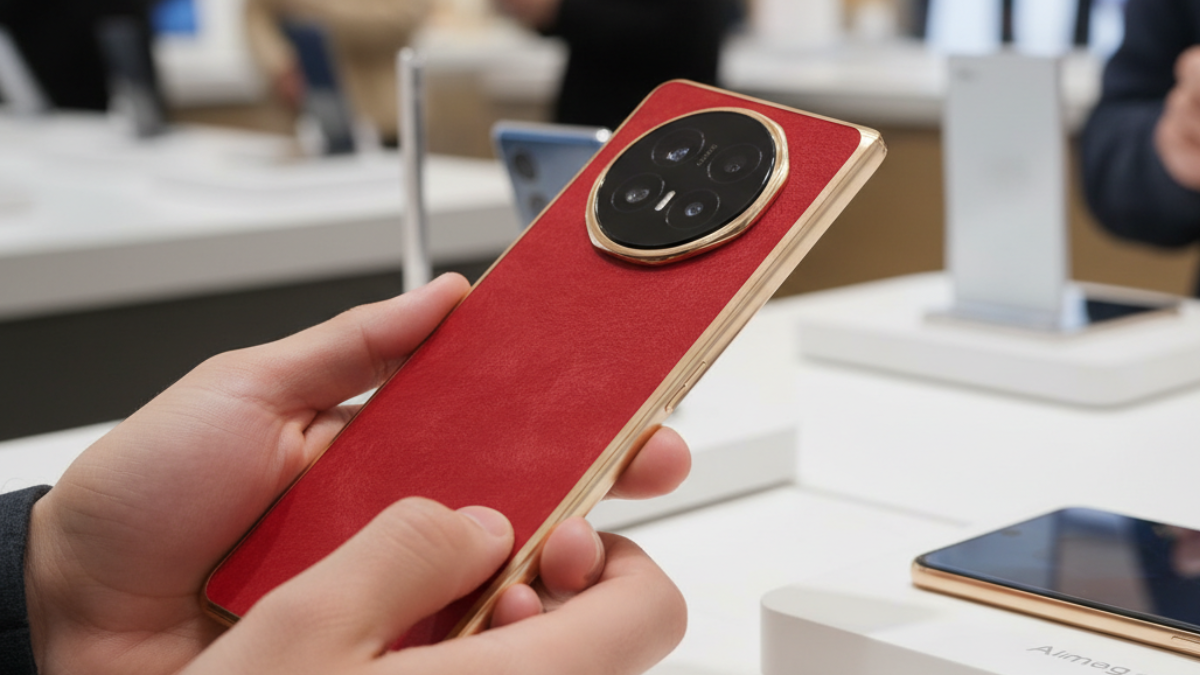
Apple, conversely, has capped the A19 Pro at roughly 12W. By giving up that 5-minute “peak” performance, they’ve ensured that the chip never hits the thermal ceiling. In 2026, Apple is playing the long game, while Qualcomm is chasing the “Hero Score” on a spec sheet.
Thermal Stability Comparison (2-Hour Heavy Load)
| Metric | Samsung Galaxy S26 Ultra (SD 8 Elite G5) | iPhone 17 Pro Max (Apple A19 Pro) |
| Peak Multi-Core (GB6) | 12,352 | 11,054 |
| Sustained Performance (120 mins) | 48% of Peak | 92% of Peak |
| Max Surface Temp | 47°C (116.6°F) | 39°C (102.2°F) |
| GPU Stability Score | 62% | 97% |
| Power Draw (Peak) | 20W | 12W |
| Game Stability (Warzone) | High Fluctuations | Stable High |
The Adreno 840 Paradox
I have to give credit to the Adreno 840 GPU inside the Snapdragon. It is, without a doubt, the most capable mobile GPU ever made. In terms of Ray Tracing and lighting effects, it makes the S26 Ultra look like a handheld PS5.
However, the GPU is also the biggest heat generator. When I played Genshin Impact 3 (the 2026 “Teyvat Expansion”), the Samsung looked noticeably better for the first ten minutes. But once the heat kicked in, the resolution scaling dropped so low that the game became a blurry mess.

Apple’s GPU isn’t as flashy. It doesn’t have the same raw ray-tracing throughput. But it is consistent. For a gamer, I would take a stable 90 FPS over a fluctuating 144-to-60 FPS experience any day of the week.
Verdict: Benchmarks Don’t Play Games
As an author who has spent years analyzing silicon, my advice for 2026 is this: Stop buying phones based on Geekbench scores. The Snapdragon 8 Elite Gen 5 is an engineering marvel, and in a device with active cooling—like the RedMagic 11 Pro—it is the undisputed king. But inside the slim, fanless chassis of the Galaxy S26 Ultra, it is a caged tiger. It wants to run, but it’s constantly being choked by its own heat.
The Apple A19 Pro is the more “human” chip. It’s designed for the way we actually use our phones. It doesn’t care about winning the sprint; it cares about being exactly as fast at hour two as it was at minute one.
My Final Recommendation:
- If you want to brag about numbers and do 30-second AI tasks: Get the Samsung.
- If you want to actually play a AAA game for an hour on your commute: Get the iPhone.
Ameer Hamza’s Pro-Tip:
If you do go with the S26 Ultra and you’re a hardcore gamer, you must buy an external Peltier cooler. Without it, you are only using about 50% of the power you paid for during long sessions.