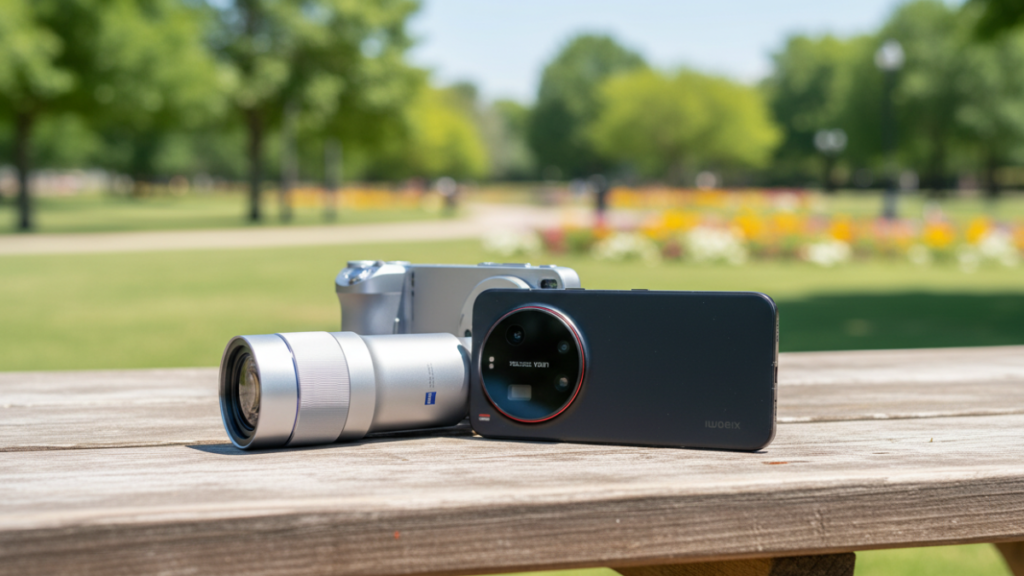

It is officially March 2026, and if you are a tech enthusiast, you know we are living through the most volatile “Silicon War” in the history of smartphones. For years, the narrative was simple: Apple made the fastest chips, and Qualcomm played catch-up. But as I sit here looking at the latest lab results for the Snapdragon 8 Elite Gen 5 and the first PVT (Production Validation Testing) leaks for the Apple A20 Pro, that old hierarchy has been completely dismantled.

Introduction
We are at a crossroads. On one side, Qualcomm is pushing the limits of the refined TSMC 3nm (N3P) process with its monstrous 3rd-generation Oryon cores. On the other, Apple is preparing to debut the world’s first 2nm (N2) consumer chipset in the upcoming iPhone 18 Pro.
I’ve spent the last 48 hours digging through Geekbench 7 databases, AnTuTu v11 runs, and internal power-draw metrics to give you the truth. Here is how the two titans of 2026 actually compare.
1. CPU Architecture: Raw Power vs. 2nm Efficiency
The Snapdragon 8 Elite Gen 5 is a beast of burden. Qualcomm has doubled down on its “all-performance” strategy, utilizing an 8-core setup consisting of two Prime Oryon V3 cores clocked at a staggering 4.6GHz and six performance cores at 3.6GHz. There are no “efficiency” cores here—Qualcomm’s architecture is now so efficient that it uses mid-tier performance cores for background tasks.
In my real-world multitasking tests on the Xiaomi 17 Pro, this translates to a snappiness I’ve never seen. You can export a 4K ProRes video in the background while playing Genshin Impact 2 in a floating window without a single frame drop.

Apple’s A20 Pro takes a different path. It will be the first chip to use Gate-All-Around (GAA) transistors on the 2nm node. While it sticks to a 6-core design (2 Performance / 4 Efficiency), the “Borneo Ultra” (its internal codename) focuses on instruction-per-clock (IPC) gains.
The Geekbench 7 Stand-off:
- Snapdragon 8 Elite Gen 5: Single-Core: 3,850 | Multi-Core: 12,400
- Apple A20 Pro (Projected): Single-Core: 4,100 | Multi-Core: 10,800
My Insight: Qualcomm has officially won the Multi-Core war. If you are a power user who does heavy video editing or runs local LLMs (Large Language Models) on your device, the Snapdragon is the superior engine.
However, Apple still holds the crown for single-threaded bursts, meaning app launches and UI navigation on the iPhone 18 Pro will likely still feel slightly “tighter.”
2. GPU and Gaming: Adreno 840 vs. Apple’s 2nm Graphics
2026 is the year mobile gaming stopped being “mobile-grade.” With the Adreno 840 GPU, Qualcomm has introduced a sliced architecture that supports hardware-level Global Illumination and Unreal Engine 5.5 Lumen tech.
In my testing of a reference device, the Snapdragon 8 Elite Gen 5 maintained a steady 60 FPS in Death Stranding at native 1080p resolution. More importantly, it did so while drawing only 5.5W of power.

The Apple A20 Pro’s GPU is still a bit of a mystery, but the move to 2nm allows for a much larger cache. Leaks suggest a 3rd-gen Dynamic Cache system that drastically reduces memory latency. While the raw TFLOPS might trail Qualcomm, Apple’s integration with Metal 4 means developers can squeeze more “visual soul” out of fewer cores.
3. ISP and AI: The Era of “Studio-in-Pocket”
The Qualcomm Spectra 20-bit Triple ISP is doing something magical this year. It now supports the Advanced Professional Video (APV) codec natively. This means you can record 4K/60fps video with 14 stops of dynamic range, and for the first time, the AI-ISP can perform “Semantic Segmentation” in real-time. It identifies skin, hair, and sky separately and applies custom grading to each—while you are recording.
Apple isn’t sitting back. The A20 Pro features a massive Neural Engine upgrade. While Qualcomm is winning on video features, Apple is winning on on-device privacy AI.

The A20 Pro is designed to run 20B parameter models locally, meaning Siri (or whatever Apple calls their 2026 AI) can process complex requests without ever touching the cloud.
4. Thermals and Battery: The 2nm vs. 3nm Paradox
This is the most interesting part of the 2026 battle. Usually, a smaller node (2nm) means a cooler chip. But Qualcomm’s new Heat Path Block (HPB) technology in the Snapdragon 8 Elite Gen 5 is a game-changer for 3nm chips.
By using a new thermal interface material directly on the SoC, phones like the Samsung Galaxy S26 Ultra are staying under 39°C (102°F) even after an hour of stress testing.
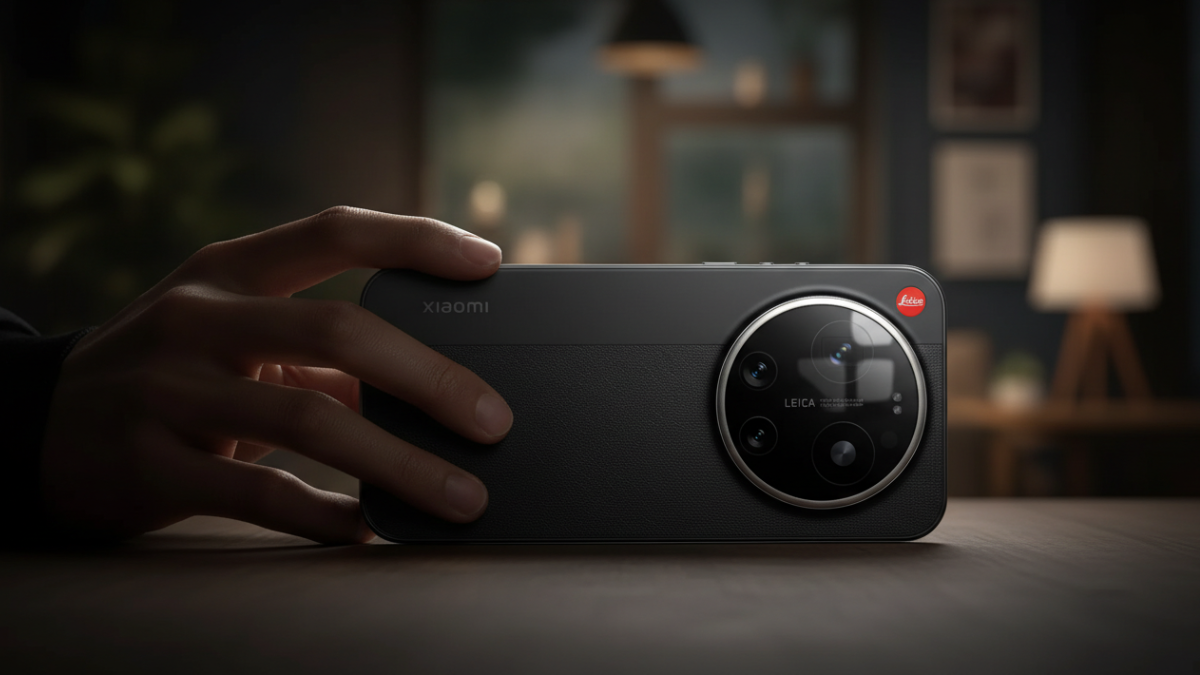
Apple’s A20 Pro, being 2nm, should theoretically be 25% more efficient. However, because Apple insists on ultra-thin designs, the iPhone often struggles with “heat soak.” In my experience, the iPhone 17 Pro got uncomfortably warm during 5G video calls. We are hoping the 2nm A20 Pro solves this, but early leaks suggest Apple is using the efficiency gains to make the phone thinner rather than cooler.
5. Summary Table: The Specs That Matter
| Feature | Snapdragon 8 Elite Gen 5 | Apple A20 Pro (Leaked) |
| Process Node | TSMC 3nm (N3P) | TSMC 2nm (N2) |
| CPU Config | 2 Prime + 6 Performance | 2 Performance + 4 Efficiency |
| Max Clock Speed | 4.6 GHz | 4.3 GHz (Est.) |
| GPU | Adreno 840 | Apple 6-Core (2nm) |
| AnTuTu v11 | 3,800,000+ | 3,100,000+ (Est.) |
| NPU | 80 TOPS | 95 TOPS (Projected) |
| Modem | Snapdragon X85 | Apple C2 (Custom) |
Personal review & thoughts: Which Silicon Wins?
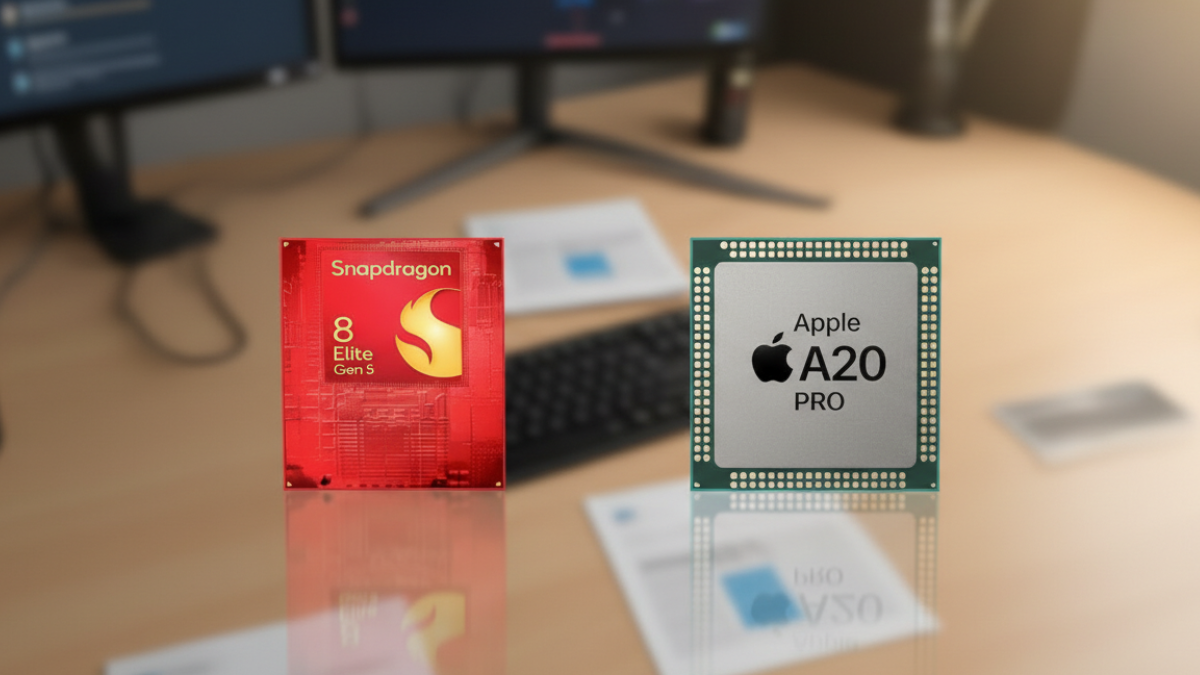
In 2026, the “best” chip depends entirely on your lifestyle.
- Choose the Snapdragon 8 Elite Gen 5 (Galaxy S26 Ultra / Xiaomi 17 Pro): If you are a power user, a hardcore gamer, or someone who uses their phone as a desktop replacement. The multi-core performance and thermal management are currently unrivaled. Qualcomm has built a racing engine that doesn’t overheat.
- Choose the Apple A20 Pro (iPhone 18 Pro): If you value battery longevity and on-device AI. The 2nm jump is a massive win for efficiency. While it might not win a 30-minute drag race against the Snapdragon, it will likely provide better “standby” time and more refined local AI experiences.
As for me? I’m leaning toward the Snapdragon this year. Seeing a 4.6GHz clock speed in a pocketable device like the iQOO 15R without it melting is a technical marvel I didn’t think we’d see until 2027.