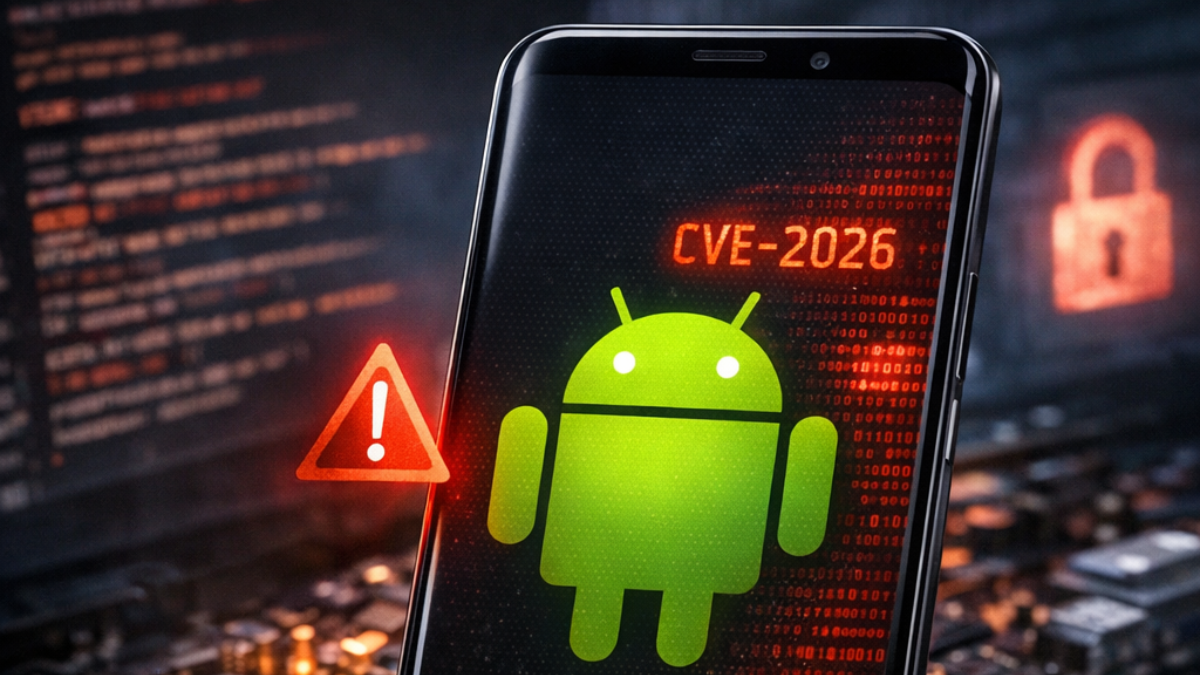
Google just released its biggest Android security update in nearly eight years. It patches 129 vulnerabilities, including one that hackers are already using to break into phones. The flaw is called CVE-2026-21385, it lives inside Qualcomm’s graphics driver, and it affects 235 different chipsets. If your phone runs on a Snapdragon processor, you need to read this right now.

What Exactly Is CVE-2026-21385?
Let me explain this in plain language, because most coverage of this flaw has been written for cybersecurity professionals, not for regular phone users.
The vulnerability in question is CVE-2026-21385 (CVSS score: 7.8), a buffer over-read in the Graphics component.
Qualcomm said in an advisory that the flaw involves “memory corruption when adding user-supplied data without checking available buffer space,” describing it as an integer overflow.
Here is what that actually means for you.
This vulnerability is a calculation error in the way the phone’s graphics hardware manages its internal memory. A malicious app can send a specific request that causes the phone’s memory counter to “roll over” and miscalculate how much space it needs. Because of this miscalculation, the phone allocates a tiny amount of memory for a large amount of data. This causes the data to “overflow” into protected areas of the phone’s system. This memory overflow allows a basic app to bypass your phone’s security barriers. Once those barriers are broken, the app gains “Master” permissions, allowing it to access your private data, messages, and camera without your knowledge.
That is the short version. A bad app tricks your phone’s graphics chip into making a math error, and that error opens a door to everything on your device.
This Is Not a Theoretical Risk. It Is Being Exploited Right Now
This is not a flaw that exists only on paper.
Google’s official Android Security Bulletin states: “There are indications that CVE-2026-21385 may be under limited, targeted exploitation.”
CVE-2026-21385 has been added to the U.S. Cybersecurity and Infrastructure Security Agency’s (CISA) Known Exploited Vulnerabilities (KEV) catalog as of March 3, 2026, requiring Federal Civilian Executive Branch (FCEB) agencies to apply the fixes by March 24, 2026.
When CISA adds a flaw to its KEV catalog and gives federal agencies a three week deadline to patch, you know this is serious. This is the same process used for critical infrastructure threats.
Security experts believe commercial spyware vendors are the most likely threat actors exploiting this flaw. The “limited, targeted” nature of the attacks suggests specific individuals, such as journalists, activists, government officials, or business executives, may be in the crosshairs rather than everyday users.
That does not mean you should ignore it. “Targeted” today can become “widespread” tomorrow once exploit code leaks or gets sold.
How Many Phones Are Affected?

The scale of this flaw is enormous.
The vulnerability lives in an open source Qualcomm graphics/display component used by a large number of Android chipsets, with Qualcomm listing that well over 230 different chipset models are affected.
Based on recently published Android and chipset market share percentages, it is reasonable to assume the issue affects hundreds of millions of devices worldwide, even if the exact number is hard to pin down.

The affected chipsets include Qualcomm Snapdragon 8 Gen 1/2/3 Mobile Platforms and Elite series, as well as Qualcomm Snapdragon 4/6/7 Gen series Mobile Platforms.
That covers everything from budget phones to the latest flagships. If your phone has a Snapdragon chip, there is a very high chance it is in the affected list.
How to Check If Your Phone Is Affected
Here is what you need to do right now.
Step 1: Find Your Chipset
On most Android phones, you can view the processor model in Settings, then About phone (or About device), then Detailed info and specs, and look for entries such as “Processor,” “Chipset,” or “SoC.” Names like “Snapdragon 8 Gen 2,” “Snapdragon 778G,” or “Qualcomm SM8xxx/SM7xxx” indicate a Qualcomm chipset and that the device may be in the affected family.
If you see any Qualcomm or Snapdragon name there, your phone is potentially affected.
Step 2: Check Your Security Patch Level
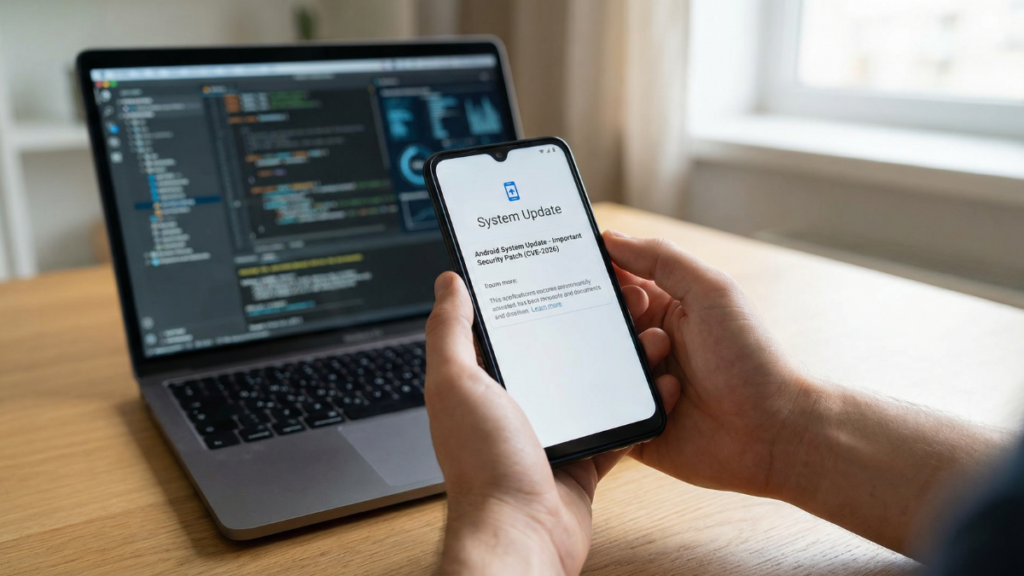
On most phones, go to Settings, then About phone (or About device), then tap Software updates to see if anything new is available.
If your Android phone shows a patch level of 2026-03-05 or later, these issues are fixed.
That date is critical. Not 2026-03-01. You need 2026-03-05 or later to be fully protected against CVE-2026-21385.

Step 3: Install the Update Immediately
You should get a notification when updates are available, but you can also check for them yourself.
If the update is available, install it now. Do not wait.

The Timeline: How This Flaw Was Discovered and Patched
Understanding the timeline helps you understand the risk window.
| Date | Event |
|---|---|
| December 18, 2025 | Google’s Android Security team reports the flaw to Qualcomm |
| February 2, 2026 | Qualcomm notifies its device manufacturer customers |
| March 2, 2026 | Google publishes the March 2026 Android Security Bulletin |
| March 3, 2026 | CISA adds CVE-2026-21385 to its Known Exploited Vulnerabilities catalog |
| March 24, 2026 | Deadline for US federal agencies to apply the fix |
Qualcomm declined to say when the earliest known instance of exploitation occurred, how many victims have been directly impacted, and what occurred during the 10 week period between the reporting and public disclosure of the vulnerability.
That ten week gap is significant. It means the flaw was known to be dangerous since December 2025, but the public patch did not arrive until March 2026. During that window, anyone with knowledge of the exploit had a head start.
CVE-2026-21385 Is Not Even the Most Dangerous Flaw in This Update
Here is the detail that should concern you even more.
Google’s March 2026 update contains patches for a total of 129 vulnerabilities, including a critical flaw in the System component (CVE-2026-0006) that could lead to remote code execution without requiring any additional privileges or user interaction.
Let me break down the most critical vulnerabilities in this update.
| CVE | Component | Severity | What It Does |
|---|---|---|---|
| CVE-2026-0006 | System | Critical (9.8) | Remote code execution, no privileges needed, no user interaction needed |
| CVE-2026-0047 | Framework | Critical (8.8) | Local privilege escalation |
| CVE-2025-48631 | System | Critical (8.6) | Denial of service across Android 14, 15, and 16 |
| CVE-2026-0037 | Kernel (pKVM) | Critical (9.0) | Virtual machine isolation bypass |
| CVE-2026-0038 | Hypervisor | Critical (9.0) | Virtual machine escape to host control |
| CVE-2026-21385 | Qualcomm Graphics | High (7.8) | Memory corruption, privilege escalation, actively exploited |
The company’s latest security update contains the highest number of Android vulnerabilities patched in a single month since April 2018.
So far this year, Google addressed one Android vulnerability in January and none in February.
That means Google went from patching zero vulnerabilities in February to patching 129 in March. This is not a normal update cycle. This is a catch up.
What If Your Phone Manufacturer Has Not Released the Update Yet?
This is the painful reality of Android security.
While Google has released the fix, the actual delivery of the update to end users depends on device manufacturers and mobile carriers, creating a window of exposure for many users.
Google Pixel phones get the update first, usually on the same day the bulletin is published. Samsung typically follows within one to two weeks for flagship models. Other manufacturers like Motorola, OnePlus, Xiaomi, and Nothing can take anywhere from two weeks to several months.

We know that because of patch gaps and end of support cycles, some users may not receive these updates.
If your phone is no longer receiving security updates, you are permanently exposed to this flaw. There is no fix coming for you.
What You Can Do While Waiting
Only install apps from official app stores whenever possible and avoid installing apps promoted in links in SMS, email, or messaging apps. Before installing finance related or retailer apps, verify the developer’s name, number of downloads, and user reviews rather than trusting a single promotional link.
Avoid sideloading apps from unknown sources. Do not click links in text messages from numbers you do not recognize. And keep Google Play Protect enabled. It is not a perfect shield, but it is an additional layer that can catch known malicious apps before they do damage.
The Bigger Problem: Android Malware Rose 151% in 2025
This vulnerability does not exist in a vacuum.
As of early 2026, data indicates that 2025 was a record breaking year for cybersecurity vulnerabilities, with Android remaining a primary target for mobile threats. The first half of 2025 saw Android malware rise by 151%, according to Malwarebytes.
More vulnerabilities and more mobile malware together shrink the margin for delayed patching, especially when attackers focus on high value targets.
The combination of a 151% increase in Android malware and a zero day flaw affecting 235 Qualcomm chipsets is exactly the kind of environment where delayed patching turns into real compromise.
My Honest Take
I am Ameer Hamza, and at Global Tech Press, we cover smartphones every single day. We review cameras, displays, batteries, and software. But none of that matters if the phone you are carrying has a security flaw that gives an attacker access to your banking apps, your private messages, and your camera.
CVE-2026-21385 is not the kind of vulnerability that will hit every single person reading this article. The current exploitation is targeted and limited. But the flaw itself affects hundreds of millions of devices. The patch is available. And installing it takes less than five minutes.
Go to Settings. Check your security patch level. If it says anything before 2026-03-05, update your phone right now.
If the update is not available yet from your manufacturer, minimize your risk by avoiding unknown apps, keeping Google Play Protect on, and watching for the update notification in the coming days.
This is the biggest Android security update in nearly eight years. Treat it that way.