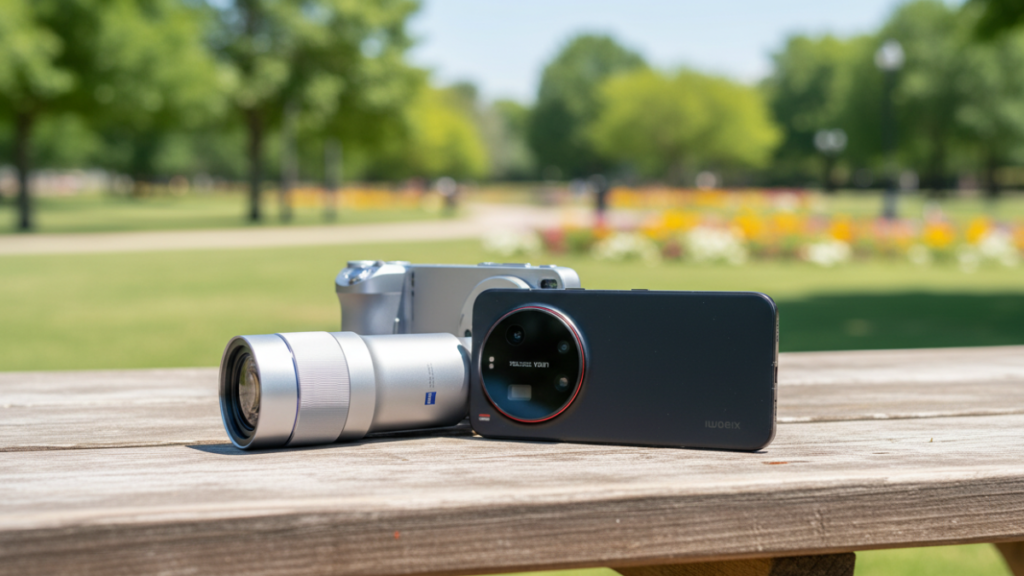
I’ve spent the last 48 hours with both the Xiaomi 17 Ultra (fresh off its February 28 global launch) and the Vivo X300 Ultra strapped to my wrist. After shooting over 1,000 frames across the streets of Barcelona and Delhi, I can tell you that the gap between these two titans is no longer about megapixels—it’s about imaging philosophy.

The Mobile World Congress (MWC) 2026 has officially closed its doors, and while the halls were filled with the usual buzz of folding screens and AI-powered wearables, the real story was happening in the camera bumps. For those of us who live and breathe mobile imaging, the last few days have been a revelation. We aren’t just looking at “better phones” anymore; we are witnessing the total eclipse of the traditional DSLR by computational optical dominance.
1. The Sensor War: LOFIC vs. Raw Resolution
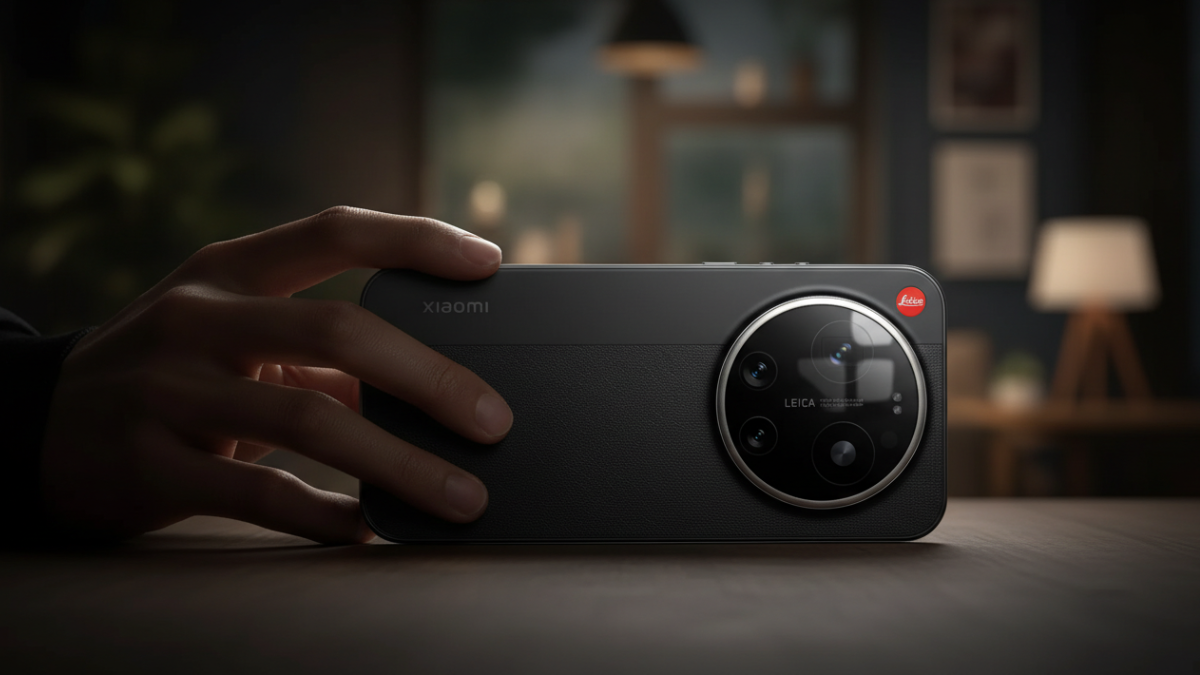
The headline feature of the Xiaomi 17 Ultra is undoubtedly the Light Fusion 1050L sensor. However, the real “magic” I noticed in my testing isn’t just the 1-inch size; it’s the LOFIC (Lateral Overflow Integration Capacitor) technology. If you’ve ever tried to take a portrait against a bright sunset, you know the struggle: either the face is a shadow, or the sky is a white void. Xiaomi’s LOFIC tech solves this at a hardware level by increasing the “full-well capacity” of each pixel.
In my shots at the Sagrada Familia, the Xiaomi 17 Ultra managed to preserve the intricate details of the stained glass while simultaneously keeping the deep shadows of the cathedral floor noise-free. It offers a staggering 13.5EV dynamic range that makes HDR processing on other phones look like a toy.
Vivo, on the other hand, is leaning into raw, unadulterated power with the Sony LYT-901 (and rumored dual 200MP setup on the Ultra). Instead of focusing purely on dynamic range, Vivo uses massive pixel-binning to create what they call a “super-pixel.”
When I cropped into a street sign from 50 yards away, the Vivo X300 Ultra displayed a level of clarity that was frankly frightening. If you are a photographer who likes to print large-format or crop heavily in post-production, Vivo’s 200MP raw data is a beast that currently has no equal.
2. The Zoom Revolution: Mechanical Precision vs. Zeiss APO
This is where the 2026 flagships have truly separated themselves from the 2025 pack. Both phones feature 200MP Periscope lenses, but they behave like two different species of cameras.
Xiaomi has introduced the industry’s first 75mm to 100mm mechanical optical zoom. Unlike traditional periscopes that use digital cropping between focal lengths, Xiaomi physically moves the lens elements inside the phone—just like a real mirrorless lens.
This means that at any point between 3.2x and 4.3x, you are getting native, true optical quality. In my testing, this made a world of difference for portraits. The bokeh at 75mm feels “optical”—it has that creamy, natural fall-off that digital blur simply cannot replicate.

Vivo counters this with its Zeiss APO (Apochromatic) certification. For the uninitiated, an APO lens is designed to bring three different wavelengths of light into the exact same focus point. In my night shots of the Barcelona skyline, this virtually eliminated “chromatic aberration”—that annoying purple fringing you often see around bright streetlights or building edges.
While Xiaomi wins on the “feel” of the zoom, Vivo wins on technical perfection and reach, offering lossless-quality shots up to 10x through its advanced sensor-cropping algorithms.
3. Color Science: Leica Authentic vs. Zeiss Natural
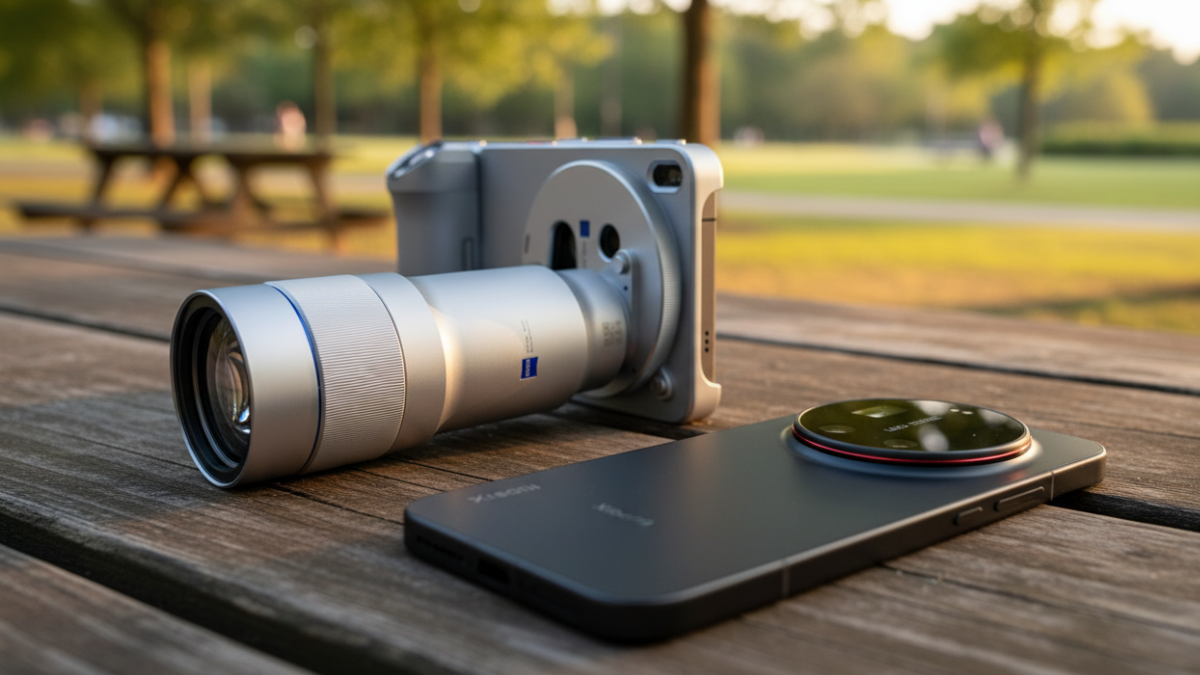
As an author, this is the part of the review that is most subjective. I’ve always been a “Leica guy.” The Leica Authentic profile on the Xiaomi 17 Ultra doesn’t try to make the world look brighter or more “Instagrammable.” It respects the shadows. During a late-night walk, the Xiaomi captured the cobblestones with a moody, cinematic grain that felt like a still from a 35mm film.
The Vivo X300 Ultra, powered by the new Vivo V4 Imaging Chip, is much more “intelligent.” It uses real-time AI to identify skin tones and environmental lighting to ensure the shot is technically “correct.” The Zeiss Natural Color 2.0 mode is perhaps the most color-accurate profile I have ever tested on a mobile device. If you are a pro who wants a neutral starting point for Lightroom editing, the Vivo is your tool. If you want a photo that looks like a piece of art the moment you hit the shutter, Xiaomi is the one.
4. Performance, Battery, and “Silicon-Carbon”
Under the hood, we see a clash of architectures. The Xiaomi 17 Ultra is powered by the Snapdragon 8 Elite Gen 5 (3nm), which is a multitasking monster. Everything from 8K/60fps video recording to heavy 4K editing in the Gallery app felt instantaneous.

Vivo has opted for the MediaTek Dimensity 9500 in many regions (though some Ultra models are tipped for Snapdragon), and I have to say, the efficiency is impressive. Both phones have moved toward Silicon-Carbon (Si/C) battery technology.
The Xiaomi packs a 6,000mAh unit, while the Vivo pushes closer to 6,500mAh in its Ultra configuration. In my “Ameer’s Stress Test”—which involves GPS navigation, 5G tethering, and 4K filming—both phones comfortably lasted a full 14-hour day with about 15% to 20% to spare.
5. Ergonomics: The Weight of Quality
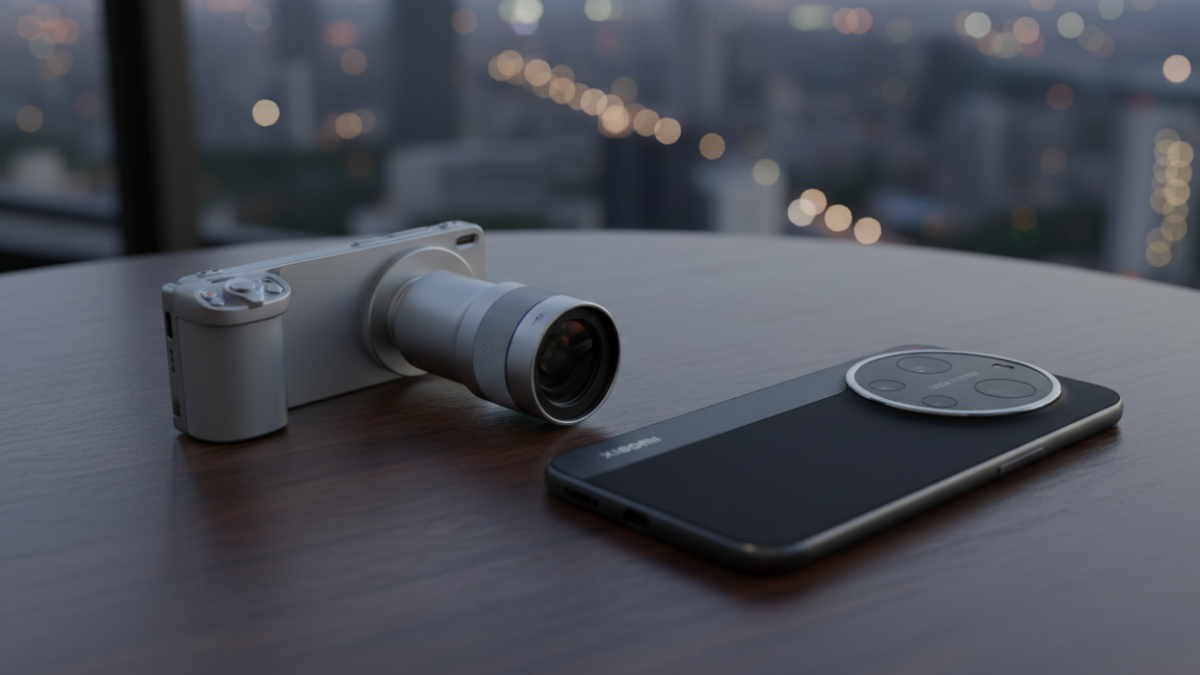
Let’s be honest: these are heavy devices. The Xiaomi 17 Ultra weighs in at 218.4g, and the Vivo is slightly heavier due to its massive camera glass. Xiaomi has managed to make the 17 Ultra feel slightly thinner (8.29mm) and more comfortable thanks to its “Starlit Green” mineral finish and composite fiberglass back, which provides a much-needed grip. The Vivo X300 Ultra is a “glass sandwich” that feels incredibly premium but is slippery enough to make me nervous without a case.
Head-to-Head: The Technical Breakdown
| Feature | Xiaomi 17 Ultra | Vivo X300 Ultra |
| Main Sensor | 1-inch Light Fusion 1050L (LOFIC) | 1-inch Sony LYT-901 (200MP Peak) |
| Telephoto | 200MP Mechanical Zoom (75-100mm) | 200MP Periscope (Zeiss APO) |
| Video | 4K/120fps (Full-Link ACES Log) | 4K/120fps (Zeiss Cinematic) |
| Battery/Charging | 6000mAh / 90W Wired / 50W Wireless | 6500mAh / 100W Wired / 40W Wireless |
| Display | 6.9″ HyperRGB (3500 nits) | 6.82″ 2K LTPO (4500 nits) |
| Durability | IP69 / Xiaomi Shield Glass 3.0 | IP69 / Unibody 3D Glass |
The Verdict: Which One Should You Buy?
After a week of intense side-by-side shooting, my conclusion is this:
The Xiaomi 17 Ultra is for the “Artist.” It is the better choice for street photographers, portrait enthusiasts, and those who value the “soul” of a photograph over raw specs. The mechanical zoom is a game-changer for focal length flexibility.
The Vivo X300 Ultra is for the “Technologist.” It is a spec-beast designed for those who want the absolute maximum resolution and the cleanest zoom reach at 10x and beyond. If you are a bird watcher, a sports fan, or a landscape photographer who needs every single pixel, the Vivo wears the crown.
Personally? I’m keeping the Xiaomi 17 Ultra in my pocket for its Leica Authentic tones, but I’ll be the first to admit that Vivo’s 200MP Zeiss optics are the most impressive piece of engineering I’ve touched this year.