The Samsung Galaxy S26 Ultra just smashed pre order records in South Korea with 1.35 million units in seven days, and 70% of those buyers picked the Ultra. After spending two weeks with it, here is what Samsung got right, what they quietly downgraded, and whether it is worth your $1,299.

Introduction
The S26, S26+, and S26 Ultra were announced on February 25, 2026 at Samsung’s Galaxy Unpacked event, alongside the Galaxy Buds 4 series, and will be released on March 11, 2026. And in the days since, something unusual happened.
Samsung has received a record 1.35 million Galaxy S26 series pre orders in South Korea before the phones even go on sale. The Galaxy S26 Ultra is the most popular model, accounting for nearly 70% of all Galaxy S26 series pre orders.
I am Ameer Hamza, and at Global Tech Press, we received the Samsung Galaxy S26 Ultra the day after Unpacked. I have been using it as my primary phone for over two weeks now. Not in a lab. Not for staged benchmarks.
Just daily life: commuting, shooting photos on the street, gaming at night, editing content on the go. And I can tell you, the reasons 70% of buyers are gravitating toward this phone are real. But so are the trade offs that Samsung did not talk about on stage.
This is the full, honest breakdown.
The Design Shift: Samsung Dropped Titanium and That Is Not a Bad Thing
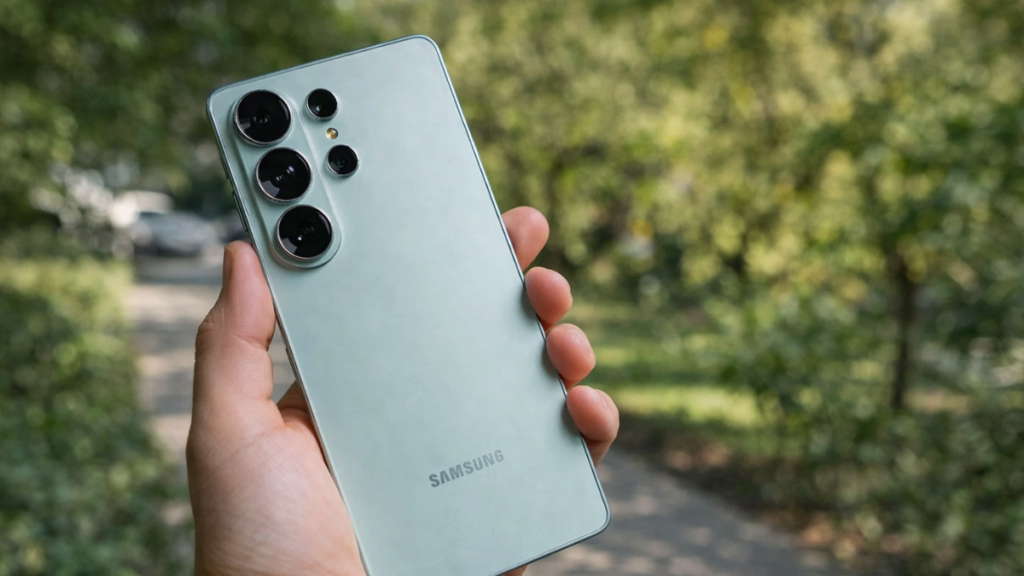
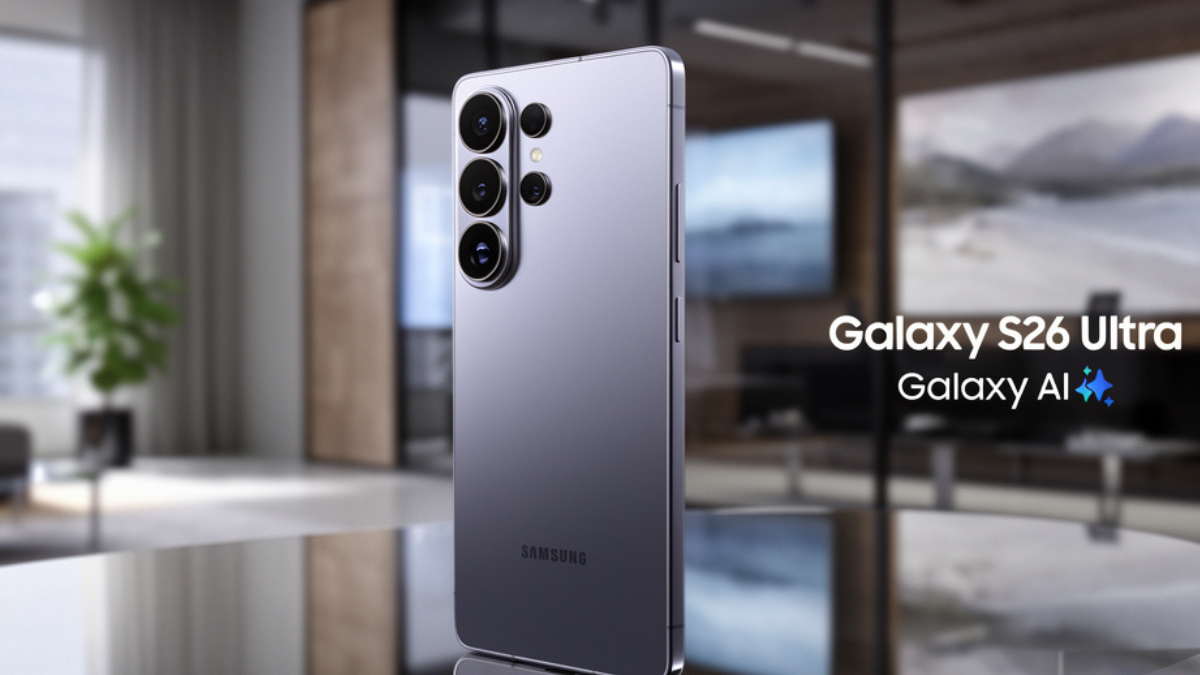
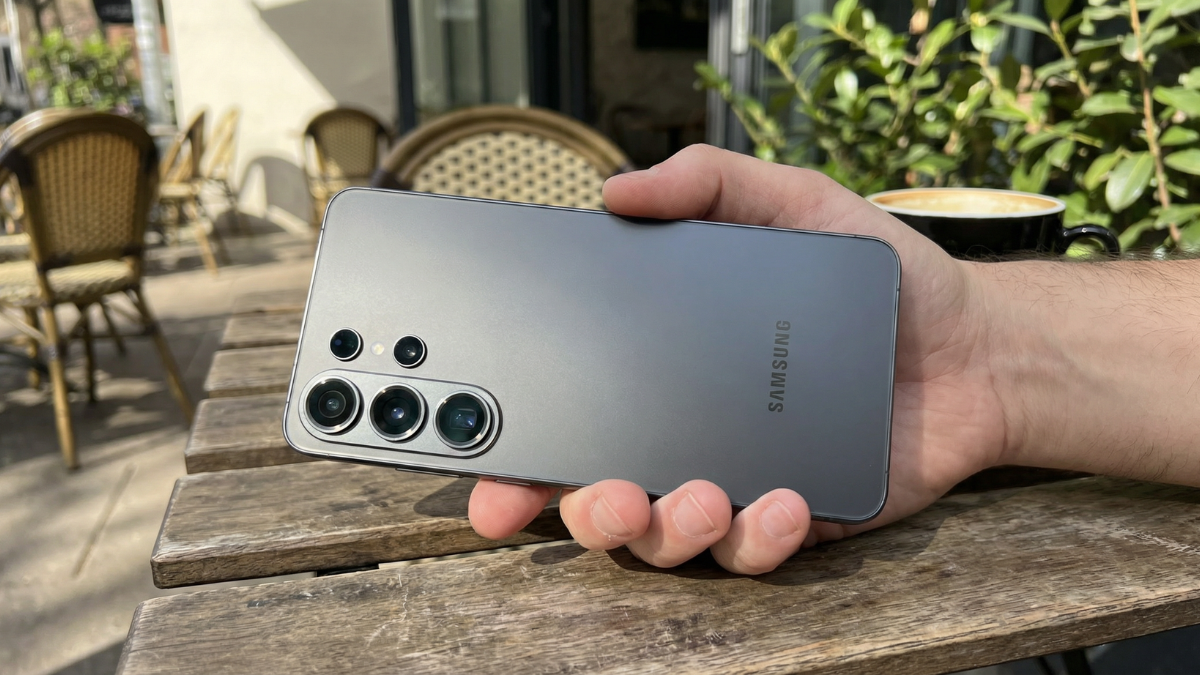
Let me address the elephant in the room immediately. The S26 Ultra reverts to an aluminum frame, which was last used on the Galaxy S23, but still features a glass back; however, the phone now features more rounded corners.
When this news first broke, the internet was furious. “Downgrade!” was trending across every Samsung forum. And on paper, titanium does sound more premium. But here is what actually matters in real life.
Why Aluminum Is an Engineering Win
The S26 Ultra ships with a redesigned vapor chamber that improves heat management by 21%. Pairing that with an aluminum frame that pulls heat away from the internals makes a lot of engineering sense.
The Aluminium frame acts as a massive secondary heat sink for the 21% larger Vapor Chamber. Early benchmarks show the S26 Ultra maintains 92% stability over a 20 minute stress test, compared to the S25 Ultra’s 84%.
In two weeks of heavy use, I never once felt the Samsung Galaxy S26 Ultra get uncomfortably warm. Not during 4K video recording, not during an hour of Genshin Impact at max settings.
That was not the case with the S25 Ultra. It’s just 7.9mm at its thinnest point and only weighs 214g. The phone genuinely feels lighter and more comfortable in the hand. The more rounded corners eliminate the sharp edges that made previous Ultras feel like holding a small brick.
The Privacy Display: A World First That Actually Works

This is the feature that Samsung clearly believes will sell the Samsung Galaxy S26 Ultra more than anything else. And after using it, I agree.
The Galaxy S26 Ultra features Privacy Display, a display technology developed and supplied by Samsung Display. The technology was originally developed under the name Flex Magic Pixel.
When the feature is enabled in device settings, the viewing angle of the screen becomes significantly narrower, making the display difficult to see from the side while appearing normal to the user.
How It Works in Real Life
I tested Privacy Display on packed trains, in coffee shops, and in a crowded airport terminal. When activated, the person sitting directly next to me could see nothing but a dim, washed out blur. From my angle, the screen looked perfectly normal.
For the first time ever, you can now limit what others can see on your phone whenever you want by enabling the built in Privacy Display on Galaxy S26 Ultra. Clear when you look at it straight on but more private when others look in, Privacy Display can even be preset to automatically turn on when receiving notifications, typing in passwords or using specific apps.
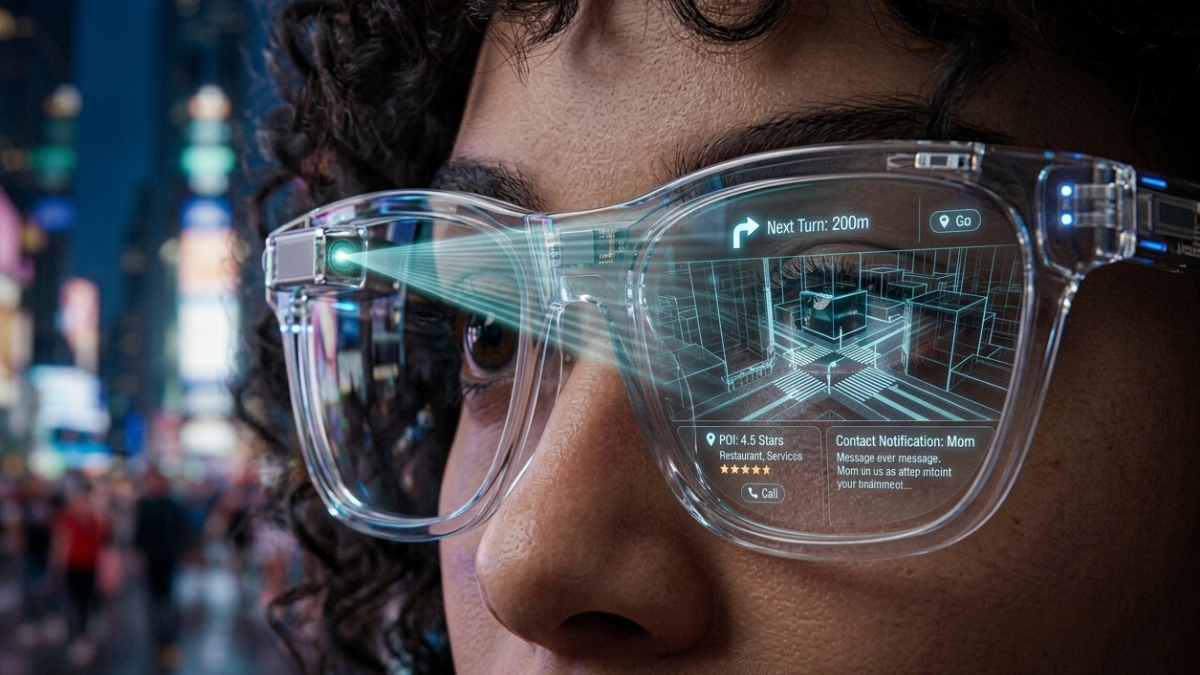
This is not a screen protector. This is not a software trick. This is hardware level privacy built directly into the OLED panel. And it is exclusive to the Samsung Galaxy S26 Ultra.
The Camera: Same Sensor, But a Very Different Lens
Here is where things get interesting, and where Samsung was both honest and strategically quiet at the same time.
The main camera’s sensor isn’t one of them: the in house HP2 200MP imager is unchanged and goes all the way back to the S23 Ultra from 2023. Something has changed and that’s the lens aperture: it’s now an even brighter f/1.4 vs. the f/1.7 of the S25 Ultra, while keeping the same 23mm equivalent focal length.
The f/1.4 Aperture Changes Everything at Night
The Ultra introduces an updated 200MP main camera with a wider f/1.4 aperture, making it 47 per cent brighter than its predecessor.
I shot side by side comparisons with the S25 Ultra in a dimly lit restaurant. The difference was visible immediately. Skin tones were warmer, shadows held more detail, and there was noticeably less grain in the Samsung Galaxy S26 Ultra’s shots.
The 50MP, 5x optical zoom telephoto sees a smaller improvement, but f/2.9 is still a step up from the old phone’s f/3.4. The 50MP ultrawide retains its autofocus abilities, letting it double as a macro shooter, while the second telephoto is still good for 3x optical zoom.
The Hidden Camera Upgrades Samsung Didn’t Mention at Unpacked
With the Galaxy S26 Ultra, users can now capture significantly better 200MP images thanks to multi frame HDR processing. Samsung says these 200MP photos are clearer, more detailed, and offer a wider dynamic range compared to 200MP shots taken on the Galaxy S25 Ultra and earlier Galaxy S series models.
The Galaxy S26 Ultra does not feature a physical variable aperture system, but Samsung offers a Virtual Aperture feature that allows users to adjust the aperture digitally. The phone simulates depth of field and other image characteristics based on the selected aperture value.
This feature debuted with the Galaxy S25 Ultra but was previously limited to the Expert RAW app. Samsung has now integrated it into the stock Camera app’s Portrait Mode.
These are the kind of details that get buried under the AI marketing. But for anyone who actually cares about photography, these are the upgrades that matter.
The Display: Still Elite, But There Is a Controversy
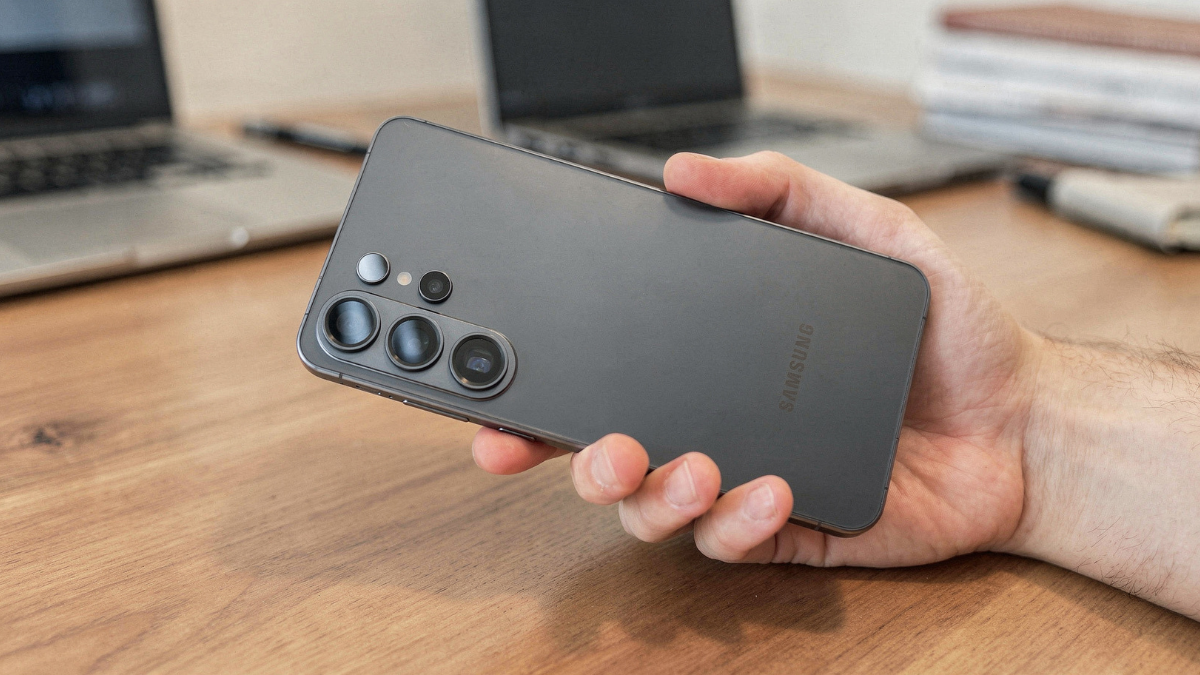
The all new 6.9in AMOLED has a wonderfully sharp 3120×1440 resolution and a 1 to 120Hz adaptive refresh rate. Black levels are impeccable, as is contrast and colour definition. Everything looks vibrant without going too far into oversaturated territory, while HDR content is simply gorgeous.
The Samsung Galaxy S26 Ultra’s display remains one of the best you can buy. It still has the Gorilla Armor 2 for its front display and rear panel. The anti reflective coating is noticeably better than a standard glass protector.
The 8 Bit vs 10 Bit Debate
Here is where Samsung stumbled. Samsung received criticism after changing its claim that the S26 series had true 10 bit displays. The screens are actually 8 bit with Frame Rate Control (FRC) to mimic the appearance of more colors.
In my daily use, can I visually tell the difference between true 10 bit and 8 bit with FRC? Honestly, no. But the fact that Samsung initially marketed it as true 10 bit and then quietly changed the language is not a good look. Transparency matters, and Samsung should have been upfront about this from the start.

Performance: Snapdragon 8 Elite Gen 5 with Actual Thermals That Work
This is a customized version of the regular Snapdragon 8 Elite Gen 5 chip. Samsung says you can expect a CPU that’s up to 19% faster, a GPU that’s up to 24% faster, and an NPU (neural processing unit for AI and machine learning) that’s up to 39% faster.
The S26 Ultra will use the same Snapdragon 8 Elite Gen 5 for Galaxy chipset as standard worldwide. That means no Exynos lottery on the Ultra. Every Samsung Galaxy S26 Ultra buyer, regardless of region, gets the same chip.
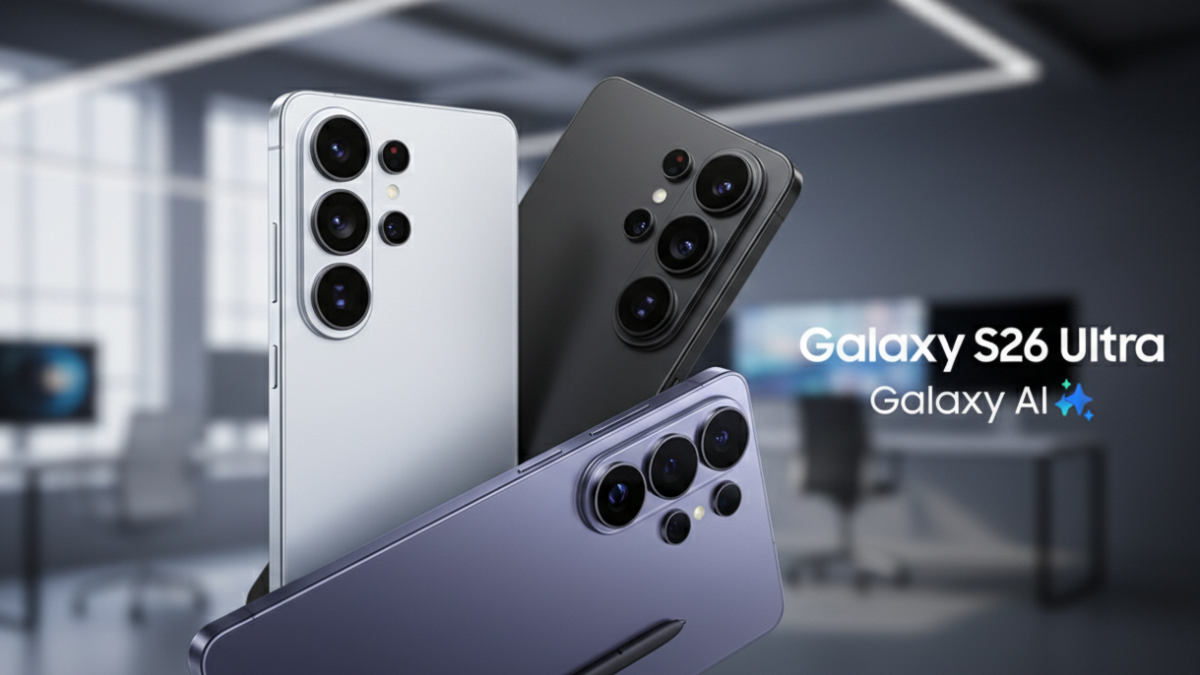
What makes the real difference here is not just the chip. It is the chip combined with the aluminum frame and the larger vapor chamber. This phone sustains performance longer than any Galaxy Ultra I have tested before.
Battery and Charging: The Same 5,000mAh, But Faster to Fill
The battery capacities for all three S26 phones are identical to their predecessors: 5,000mAh on the S26 Ultra. The only difference is in charging speeds on the S26 Ultra, which can now fast wire charge at up to 60W and fast wireless charge at up to 25W.
The Ultra supports 60W wired charging, reaching 75% in 30 minutes, alongside faster 25W wireless charging.
Is it disappointing that Samsung stuck with 5,000mAh while competitors like OnePlus and Honor are pushing 6,000mAh and 7,000mAh silicon carbon batteries? Yes. But in practice, the Samsung Galaxy S26 Ultra comfortably lasts a full day of heavy use.
The faster charging speed means that even a quick 30 minute top up during lunch gets you through the rest of the evening without worry.
Galaxy AI: Now Nudge, Now Brief, and Perplexity Powered Bixby
Samsung’s AI story on the Samsung Galaxy S26 Ultra is less about flashy demos and more about quiet, practical tools.
Now Nudge is a new feature that intelligently understands what’s on your screen and will provide suggestions, such as viewing your Calendar to add an event or the option to jump straight to your Gallery when someone asks you to share photos with them.
Now Brief delivers even more personalized insights based on user behavior and preferences in bite sized briefs. These include reminders based on information saved on your device like booking details and friends’ birthdays. Bixby now understands natural language questions for quick changes to device settings or a simple web search.
In daily use, Now Nudge is the one I find myself appreciating most. It does not shout at you. It just quietly offers the next logical step. And that is what good AI should feel like.
Samsung Galaxy S26 Ultra Specs at a Glance
| Spec | Samsung Galaxy S26 Ultra |
|---|---|
| Display | 6.9″ Dynamic AMOLED 2X, 3120×1440, 120Hz, 2600 nits, Gorilla Armor 2 |
| Chipset | Snapdragon 8 Elite Gen 5 for Galaxy (worldwide) |
| RAM | 12GB (256GB/512GB) / 16GB (1TB) |
| Storage | 256GB / 512GB / 1TB |
| Main Camera | 200MP, f/1.4, OIS, Samsung ISOCELL HP2 |
| Ultrawide | 50MP, f/1.9, autofocus, macro |
| Telephoto 1 | 10MP, 3x optical zoom, f/2.4 |
| Telephoto 2 | 50MP, 5x optical zoom, f/2.9 |
| Front Camera | 12MP, f/2.2, dual pixel PDAF |
| Battery | 5,000mAh |
| Wired Charging | 60W (Super Fast Charging 3.0) |
| Wireless Charging | 25W |
| Frame | Armor Aluminum |
| Weight | 214g |
| Thickness | 7.9mm |
| Software | Android 16, One UI 8.5 |
| S Pen | Yes, built in |
| Privacy Display | Yes (Flex Magic Pixel, Ultra exclusive) |
| Colors | Black, White, Cobalt Violet, Sky Blue + online exclusives (Silver Shadow, Pink Gold) |
| US Price | $1,299 (256GB) / $1,499 (512GB) / $1,799 (1TB) |
| UK Price | £1,279 (256GB) |
| Release Date | March 11, 2026 |
The Pre Order Numbers Tell the Real Story
Over an impressive seven day period, from February 27 to March 5, Samsung secured a staggering 1.35 million pre orders. This unprecedented speed outpaces the Galaxy S25 trio from last year, which took 11 days to reach 1.3 million pre orders.
Among the lineup, the Galaxy S26 Ultra stands out as the clear favorite, accounting for approximately 70 percent of all pre orders. This is the highest share ever recorded for an Ultra model in Samsung’s history.
That is a significant jump. Last year, the S25 Ultra made up “only” 52% of all pre orders. This year, it is 70%. The Privacy Display and the wider f/1.4 camera aperture clearly resonated with buyers more than Samsung probably expected.
Who Should Buy the Samsung Galaxy S26 Ultra?
After two weeks of daily use, my honest take is this.
Upgrade if you have a Galaxy S24 Ultra or older. The jump in thermals, ergonomics, camera aperture, charging speed, and Privacy Display is meaningful enough to feel like a proper generational leap. The rounded corners alone make it feel like a different phone in the hand.
Wait if you have a Galaxy S25 Ultra. The improvements are real, but they are iterative. Unless Privacy Display is something you specifically need, or the f/1.4 aperture matters to your photography, you are not missing out on a transformative upgrade.
Skip if battery capacity matters more than anything else. At 5,000mAh in a world where competitors are shipping 6,000mAh and 7,000mAh cells, the Samsung Galaxy S26 Ultra is falling behind in raw endurance. The faster 60W charging helps, but it does not change the fact that this phone still needs a nightly charge under heavy use.
My Honest Take
The Samsung Galaxy S26 Ultra is not a revolution. Samsung themselves seem to know this. Samsung’s preference for iterative evolution over spec chasing hasn’t changed for 2026. The same 200MP sensor from 2023 is still doing the heavy lifting. The battery has not grown in three years.
But here is the thing. Despite all of that, this phone just works. The Privacy Display is a genuine world first that feels like it should have existed years ago. The aluminum frame is lighter, cooler, and more comfortable. The f/1.4 aperture makes a visible difference in every low light photo.
The 60W charging is finally competitive. And the Snapdragon 8 Elite Gen 5, paired with proper thermal management, delivers sustained performance that does not crater after ten minutes of heavy load.

You’re getting a lot of smartphone for the price, as the Galaxy S26 Ultra is objectively the Android flagship to beat in 2026.
Is it perfect? No. The 8 bit display controversy is a real blemish. The 5,000mAh battery is starting to feel outdated. And $1,299 is a lot of money regardless of what you are getting.
But 70% of Korean buyers looked at the entire S26 lineup and picked the Ultra. After two weeks with it, I understand that decision completely.