Huawei Mate XT2 vs Samsung Galaxy Z TriFold. For the past five years, the “foldable” debate has been binary: you either want a flip phone that gets small, or a book-style phone that gets big. But as we move into the second quarter of 2026, a third category is officially taking over the ultra-premium space. We are witnessing the Rise of the Tri-Fold.

Introduction
Samsung has finally broken its silence, releasing the long-rumored Galaxy Z TriFold in early 2026 to challenge Huawei’s dominance. Meanwhile, Huawei is already iterating on its head start with the Mate XT2 (sometimes referred to as the Mate XTs in early production leaks).
I’ve had the chance to track the early retail units of Samsung’s tri-fold and compare them against the refined engineering of Huawei’s second-gen masterpiece.

If you’re ready to spend nearly $3,000 on a device that replaces your phone, tablet, and laptop, here is the breakdown of which 10-inch powerhouse deserves your pocket space.
1. Design Philosophy: The “Z” vs. The “U”
The most striking difference between these two isn’t the size, but how they actually fold.
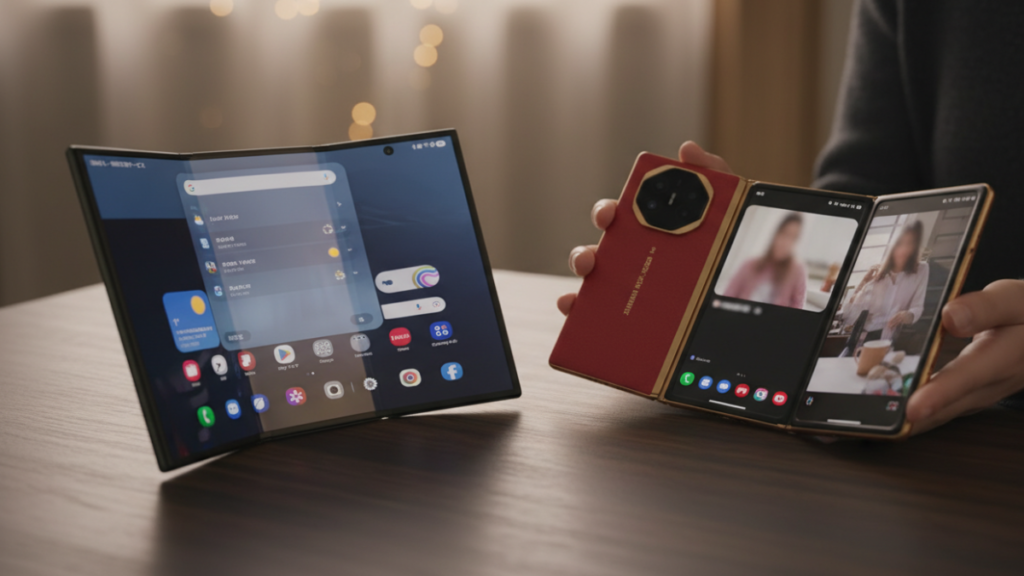
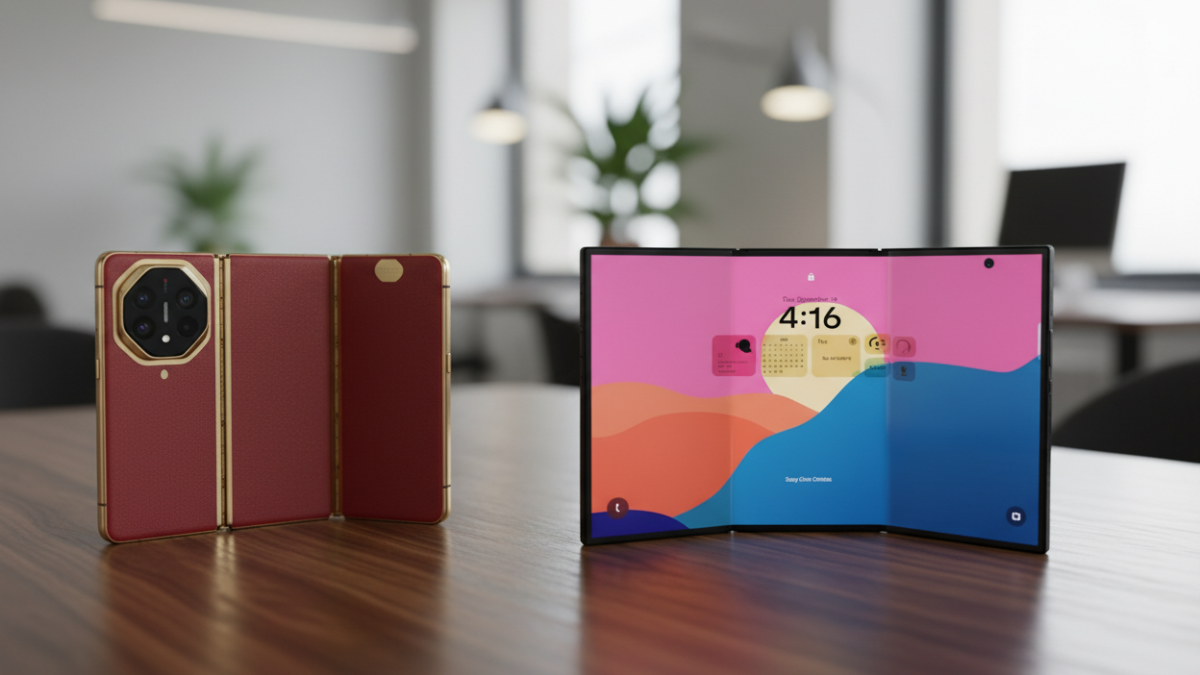
- Huawei Mate XT2: Sticks to the “Z-fold” (zigzag) pattern. One hinge folds inward, and the other folds outward. This means that when the device is closed, a portion of the main 10.2-inch display remains on the outside to act as your 6.4-inch cover screen.
- Samsung Galaxy Z TriFold: Samsung has gone for a more protective “U-fold” or dual-inward design. Both hinges fold toward the center, protecting the massive 10.0-inch inner display completely. To use it as a phone, you rely on a separate, dedicated 6.5-inch cover display on the front.
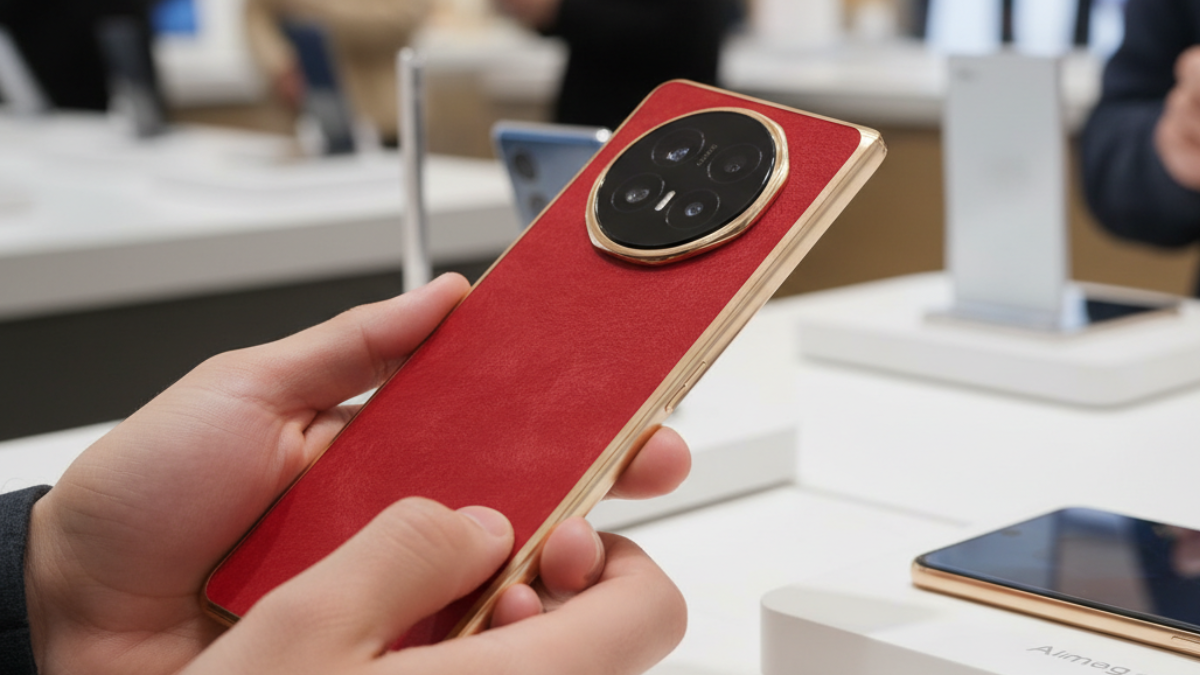
My thought: Huawei’s design feels more “sci-fi” because the screen effectively is the phone. However, as someone who has accidentally scratched an exposed foldable screen, I have to give the durability win to Samsung. The Galaxy Z TriFold feels like a tank, while the Mate XT2 still feels like a delicate piece of high-tech jewelry that needs to be “babied.”
2. Display Tech: 120Hz Smoothness vs. 3K Real Estate
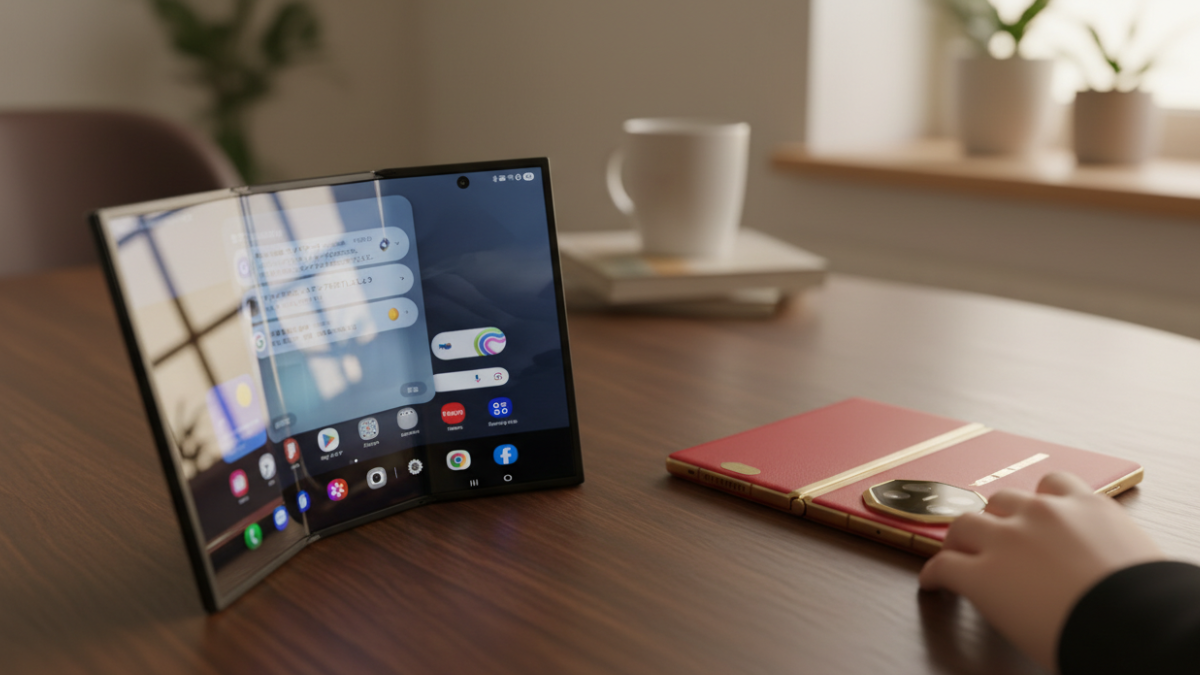
Samsung has utilized its M14 OLED material for the Z TriFold, and the results are stunning. We are talking about a peak brightness of 2,600 nits on the cover screen and 1,600 nits on the internal 10-inch panel. More importantly, Samsung offers a 120Hz adaptive refresh rate across all three panels.
The Huawei Mate XT2 counters with sheer resolution. Its 3K OLED (3184 x 2232) panel is noticeably sharper for reading text and viewing high-res photos. While Huawei has improved the refresh rate from the first gen’s 90Hz to a smoother variable LTPO setup, it still feels a hair less fluid than the Samsung when scrolling through deep system menus.
3. The Crease Problem: Is It Finally Gone?
In 2026, we should be past the “crease” era, right? Almost.
- Samsung: Uses a new “Shock-Absorbing Layer” and a refined hinge that spreads the stress of the fold. The result is a crease that is virtually invisible from a direct angle, though you can still feel a slight dip when using the S-Pen.
- Huawei: The Mate XT2 uses Ultra-Flexible Glass (UFG) with variable thickness. Because it folds in two different directions, the “memory” of the fold is less pronounced. To my eye, the Huawei display looks flatter when fully unfolded, making it the better choice for watching 21:9 cinematic movies.
4. Performance and Software: Android 16 vs. HarmonyOS Next
This is where the battle gets ideological.
- Samsung: Powered by the Snapdragon 8 Elite Gen 5 (for Galaxy). It runs Android 16 with One UI 8. The multitasking is legendary—you can run three full-sized “portrait” apps side-by-side. Plus, Samsung DeX now runs natively on the 10-inch screen, effectively turning the Z TriFold into a mini-workstation without needing an external monitor.
- Huawei: Uses the Kirin 9020 5G (7nm-class, but highly optimized). It runs HarmonyOS 5.1. While Huawei’s ecosystem is incredibly fast and offers superior “satellite connectivity” features for emergency internet in remote areas, the lack of native Google Services remains a hurdle for many Western users.
5. Camera Systems: 200MP vs Variable Aperture
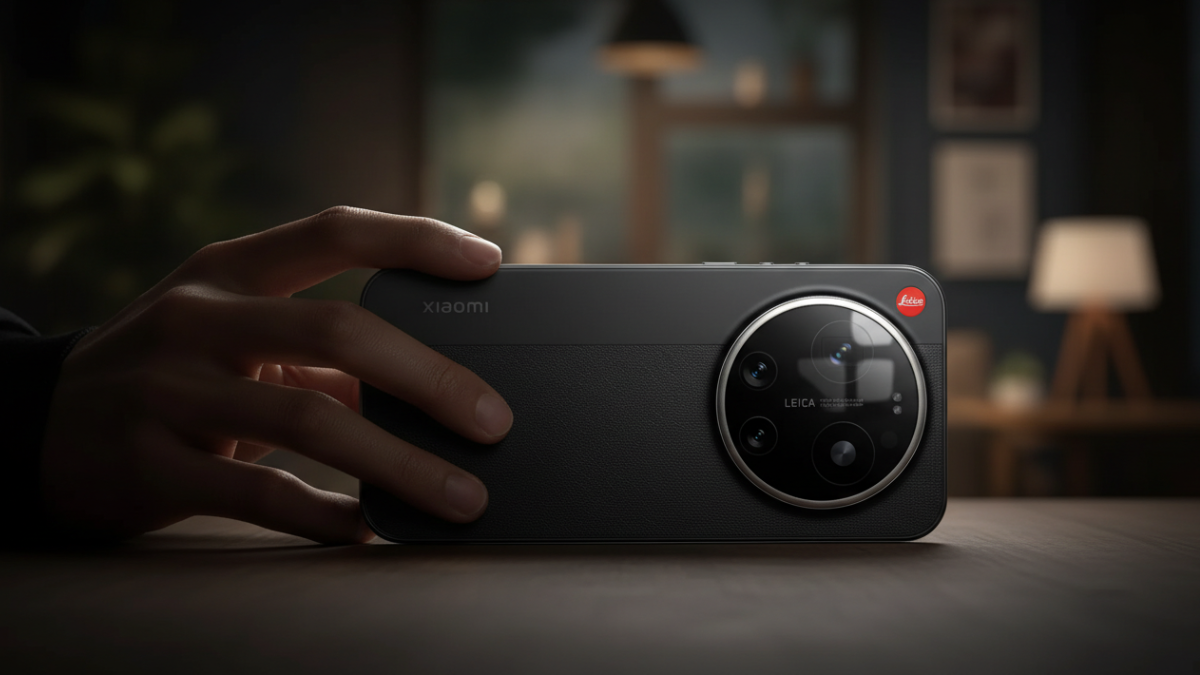
Samsung didn’t hold back, equipping the Z TriFold with the 200MP main sensor from the S26 Ultra. If you want the best “point-and-shoot” experience with massive digital zoom (up to 100x Space Zoom), Samsung wins.
Huawei, however, plays to the “Pro” photographer. The Mate XT2 features a 50MP physical variable aperture (f/1.4 to f/4.0). This allows for real optical bokeh that looks vastly superior to Samsung’s AI-generated blur. For portraits and macro shots, the Huawei Mate XT2 is the most sophisticated camera ever put in a foldable.
Comparison Table: 2026 Tri-Fold Titans
| Feature | Samsung Galaxy Z TriFold | Huawei Mate XT2 |
| Main Display | 10.0″ Dynamic AMOLED 2X | 10.2″ LTPO OLED (3K) |
| Hinge Style | Dual-Inward (Protective) | Z-Fold (Exposed) |
| Processor | Snapdragon 8 Elite Gen 5 | Kirin 9020 5G |
| Battery | 5,600 mAh (45W) | 5,600 mAh (66W) |
| Main Camera | 200MP Ultra Vision | 50MP Variable Aperture |
| OS | Android 16 (Google) | HarmonyOS 5.1 |
| Weight | 309g | 298g |
| Price (Est.) | $2,899 | $2,499 (CNY 15,000) |
Verdict: Which One Should You Buy?
After spending time with both, the choice comes down to your “risk tolerance” and where you live.
The Samsung Galaxy Z TriFold is the “sensible” choice. It’s better protected, runs all your favorite apps, and has the brute force of the Snapdragon 8 Elite. It feels like a finished product designed for the masses.
The Huawei Mate XT2 is for the person who wants to live on the bleeding edge. It is thinner, lighter, and the variable aperture camera is a dream for creators. Yes, the screen is more exposed, and the software requires some workarounds for Google apps, but it feels like the future in a way the Samsung doesn’t quite match.
If I were spending my own money today? I’d go with the Samsung Z TriFold. In 2026, I want my $2,900 investment to survive a trip in my pocket without a specialized carrying case.