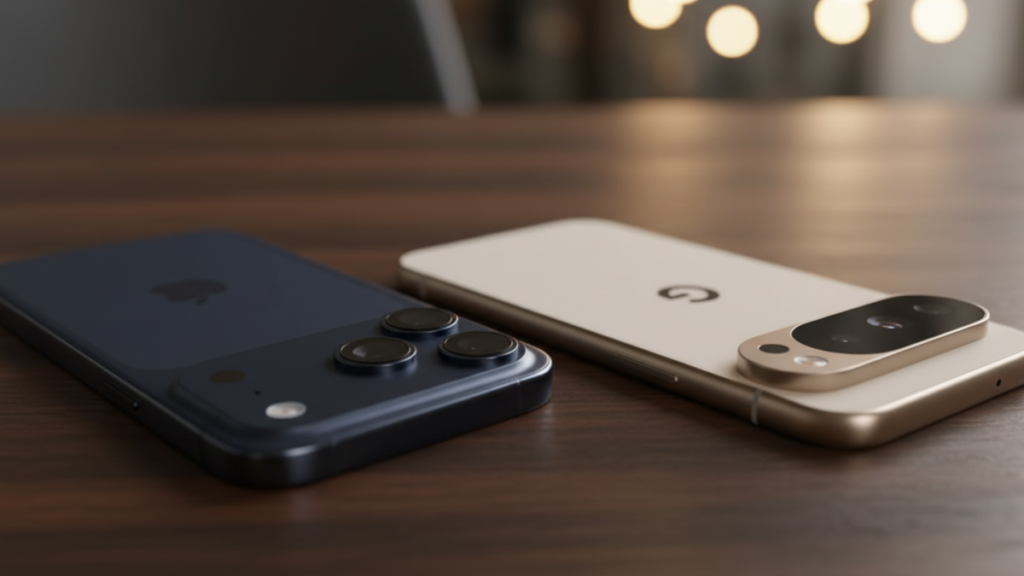
What happens to “Smart” phones when the Wi-Fi dies? I took the Google Pixel 10 Pro and iPhone 17 Pro on a 12-hour flight to see if the Tensor G5’s local AI can actually beat Apple Intelligence in Airplane Mode.

In 2026, every smartphone is an “AI Phone.” Or at least, that’s what the glossy billboards in San Francisco and London want you to believe. But as a frequent traveler, I’ve noticed a glaring flaw in this AI revolution: most of these “brilliant” features have the IQ of a brick the moment you lose bars or toggle that Airplane Mode switch.
I am Ameer Hamza, and I believe the true measure of a flagship in 2026 isn’t how fast it can query a server in a data center—it’s how much “brain” it actually carries in its pocket.
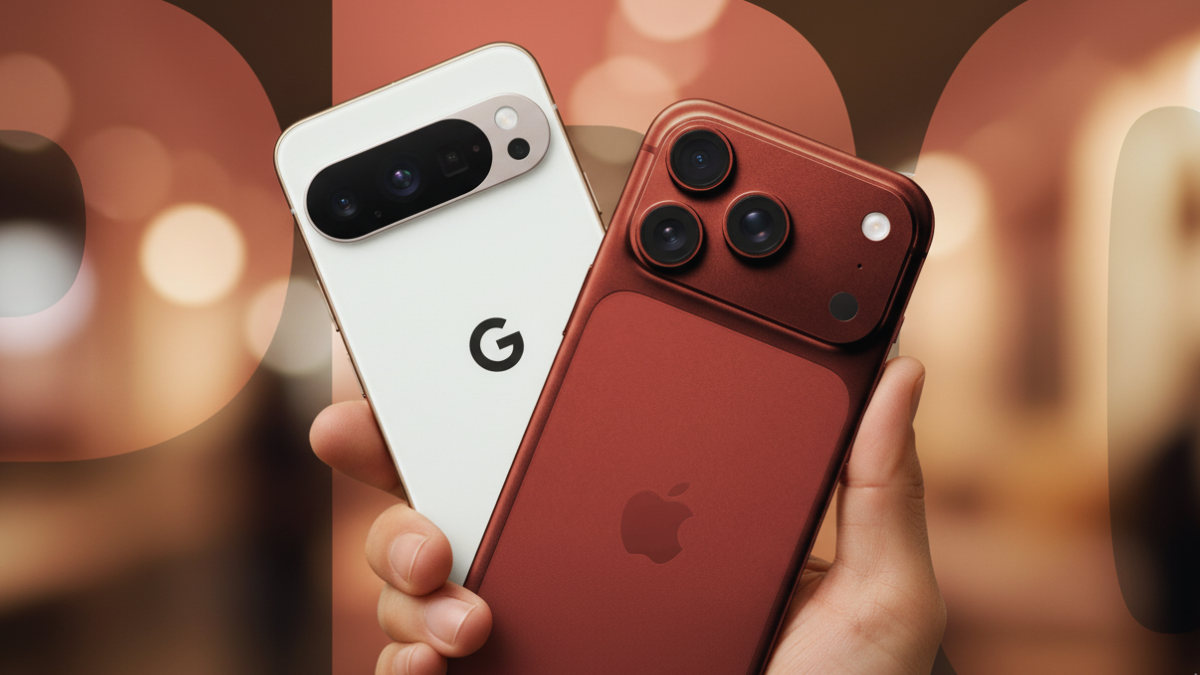
To prove this, I spent a 12-hour flight from New York to Dubai with the two heavyweights of the year: the Google Pixel 10 Pro (powered by the new Tensor G5) and the iPhone 17 Pro (running Apple Intelligence 2.0 on the A19 Pro). No Wi-Fi. No Cellular. Just raw, local silicon. Here is what happens when the cloud disappears.
The Contenders: Local Brains vs. Hybrid Dreams
Before we dive into the results, we have to look at the engineering philosophy.
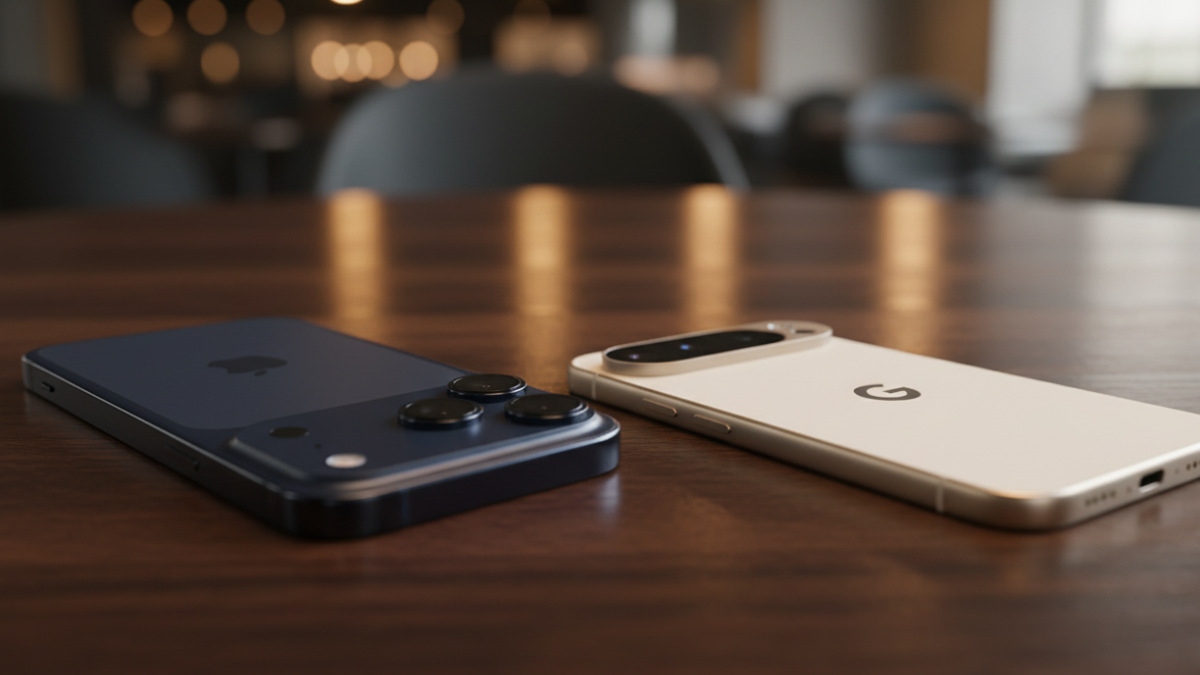
Google’s Tensor G5 was built with a singular obsession: Gemini Nano. This is a massive, distilled version of their large language model that lives permanently on the Pixel’s storage. Google has dedicated a huge portion of the Tensor G5’s TPU (Tensor Processing Unit) just to running this model without ever pinging a satellite.
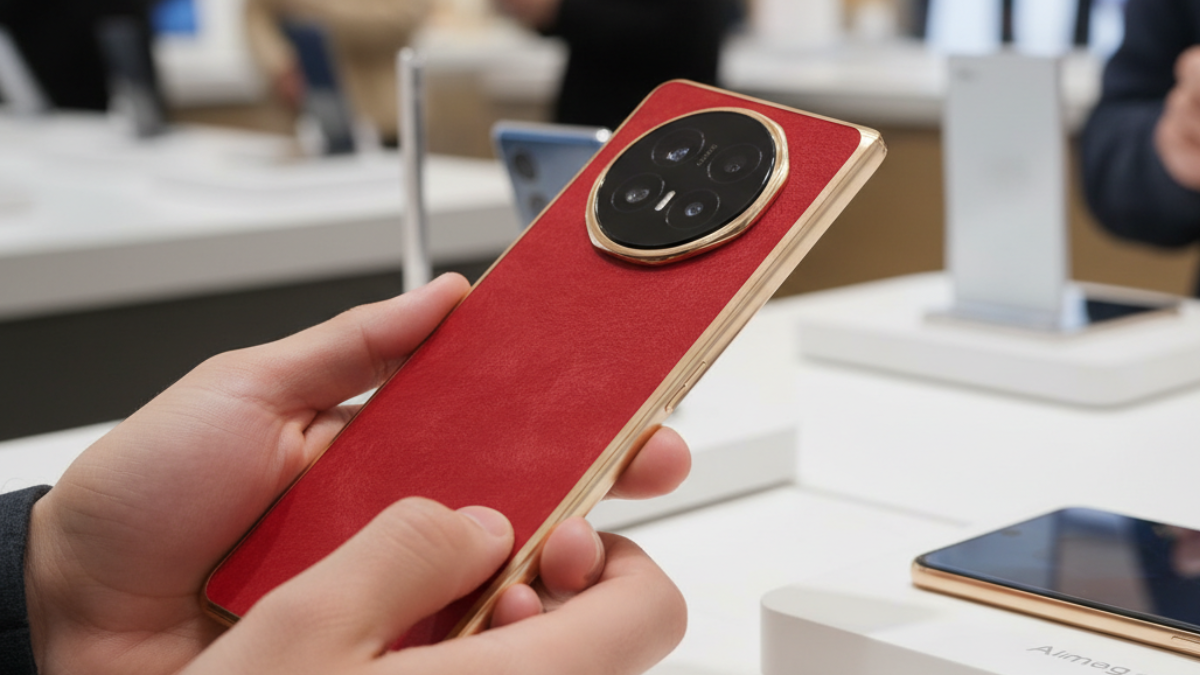
Apple’s A19 Pro, meanwhile, uses a Hybrid Model. Apple Intelligence 2.0 is incredibly fast, but it prefers to offload “complex” tasks to Private Cloud Compute. Apple claims this is for privacy and power, but in Airplane Mode, that “Offload” becomes a “Dead End.”
Test 1: The Language Barrier (Live Translation)
Imagine you’ve just landed in a foreign country, you have no local SIM yet, and you need to communicate.
- Google Pixel 10 Pro: I used the Interpreter Mode to translate a complex conversation from English to Arabic. Because the Tensor G5 has the entire language library downloaded locally, the translation was near-instant. There was zero lag. It felt like talking to a human.
- iPhone 17 Pro: Apple’s Translate app works offline, but only if you’ve pre-downloaded the specific language packs. Even then, the “Live Conversation” feature felt sluggish. Without the cloud to help process the nuances of the dialect, the A19 Pro struggled with context, often giving me literal, robotic translations that didn’t make sense.
Winner: Pixel 10 Pro. Google’s on-device translation is at least two generations ahead of Apple when the internet is stripped away.
Test 2: Summarizing the “Un-summarizable”
During the flight, I had a 50-page PDF document regarding 2nm semiconductor trends (yes, I’m that fun at parties). I asked both phones to summarize the key takeaways.
- iPhone 17 Pro: A “No Internet Connection” pop-up appeared. While Apple Intelligence can summarize short emails and texts locally, it refused to touch a 50-page document without “Cloud Assistance.” The A19 Pro’s Neural Engine is powerful, but Apple’s software guardrails limit what it’s allowed to do locally to save battery.
- Google Pixel 10 Pro: Using Pixel Screenshots and Magic Cue, the Tensor G5 indexed the entire PDF locally in about 14 seconds. It gave me a bulleted list of the three most important trends. It didn’t need a server; it just used the raw horsepower of the G5’s 60% more powerful TPU.
Winner: Pixel 10 Pro. The “AI Phone” branding is earned here. The Pixel actually processes the data; the iPhone mostly just routes it.
Test 3: Creative Editing (Magic Editor vs. Clean Up)
I took a photo of the airplane wing through a scratched, blurry window and tried to “AI-fix” it.
- iPhone 17 Pro: The “Clean Up” tool worked perfectly. It removed a stray reflection on the glass using local on-device generative fill. Apple has optimized its photo AI to be almost entirely local, and the A19 Pro’s GPU handled the image reconstruction beautifully.
- Google Pixel 10 Pro: The Magic Editor on the Pixel 10 Pro is now “Agentic.” I could simply tell it, “Make the sky look like sunset and remove the scratches on the window.” Even without internet, the Tensor G5 generated a stunning, realistic sunset. However, it took about 8 seconds longer than the iPhone.
Winner: Tie. Apple is faster at simple object removal, but Google is more “creative” with local generative capabilities.
The NPU Reality Check: Benchmarks vs. Utility
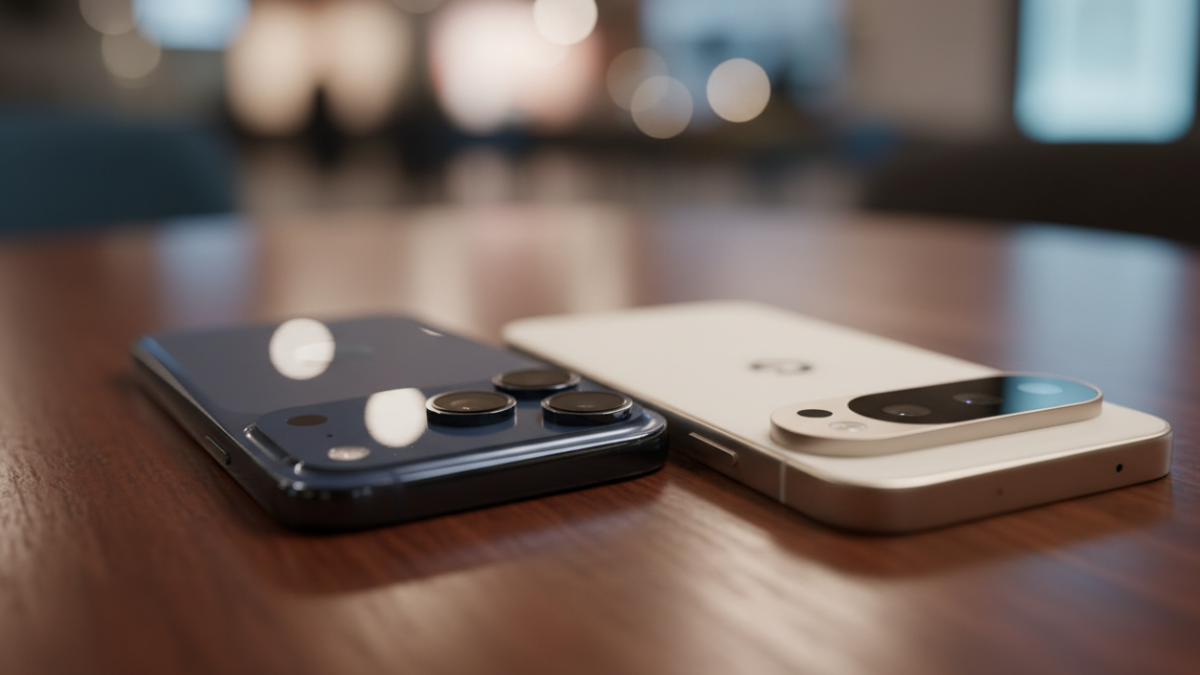
| Metric | Google Pixel 10 Pro (Tensor G5) | iPhone 17 Pro (Apple A19 Pro) |
| On-Device LLM | Gemini Nano (Full version) | Apple Intelligence (Core only) |
| Offline Translation | Fluid & Context-Aware | Literal & Stilted |
| Large Doc Summary | Full Local Support | Restricted (Cloud required) |
| Offline Photo AI | High Creative Control | Fast, Basic Cleanup |
| Battery Drain (AI Task) | Moderate | Low |
| NPU Power (TPU) | 60% Increase over G4 | Incremental over A18 Pro |

My personal answer: Which “Brain” Should You Trust?
After 12 hours in the air, the conclusion is undeniable. If you are a traveler, a journalist, or someone who lives in an area with spotty 5G, the Google Pixel 10 Pro is the only true “AI Phone” on the market in 2026.
Google has taken the “Local First” approach. The Tensor G5 isn’t trying to win Geekbench races against Apple (it still loses in raw CPU speed). Instead, it’s winning the Utility Race. It turns your phone into a self-contained assistant that doesn’t care if you’re in a subway tunnel or over the Atlantic Ocean.
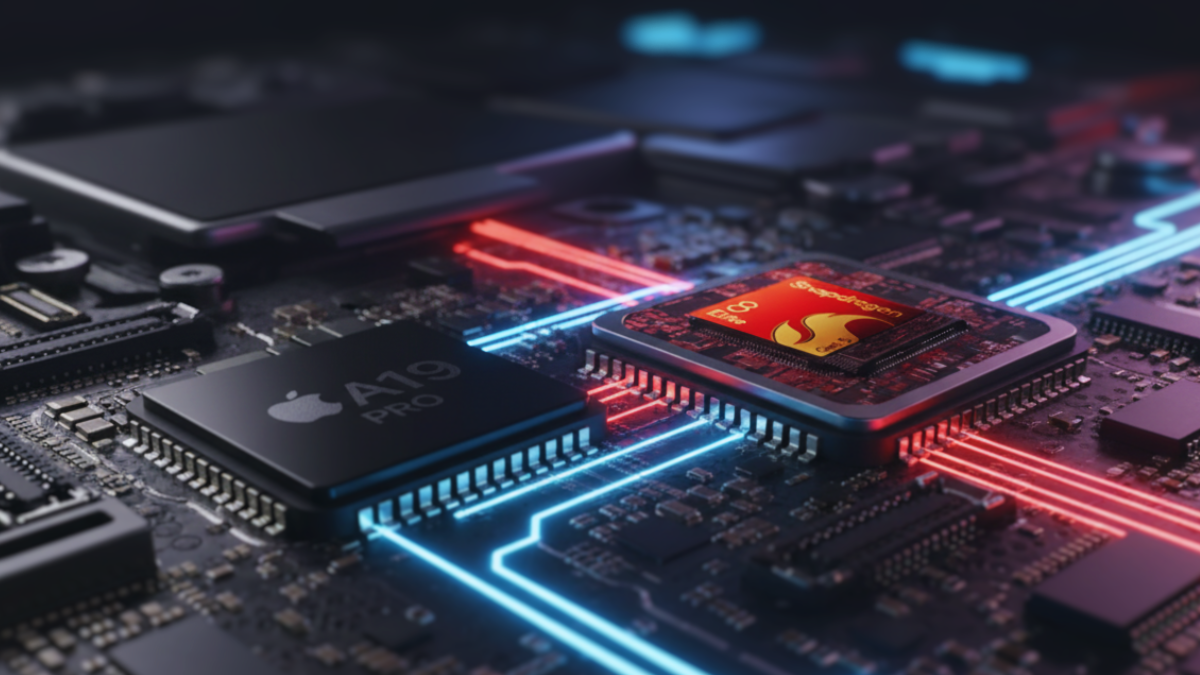
The iPhone 17 Pro is a faster phone, but it’s a dumber assistant without the cord. Apple’s reliance on the cloud is a “tether” that limits the A19 Pro’s potential. Until Apple allows the Neural Engine to handle massive local models without “phoning home,” the Pixel 10 Pro remains the king of the offline world.
My Advice: If your life happens on the go, buy the Pixel. If you’re always within 50 feet of a Wi-Fi router, the iPhone’s speed might still win you over.