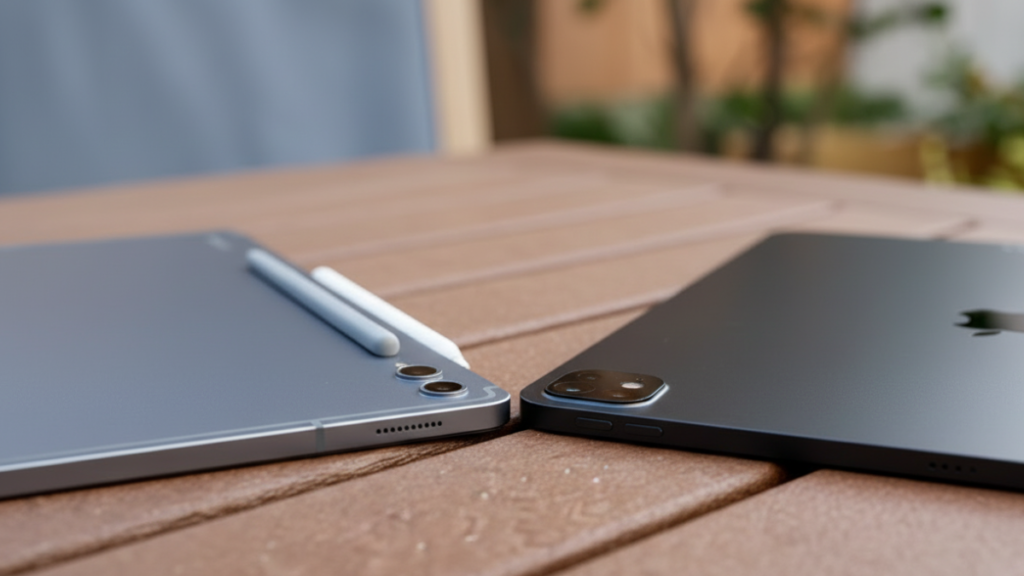
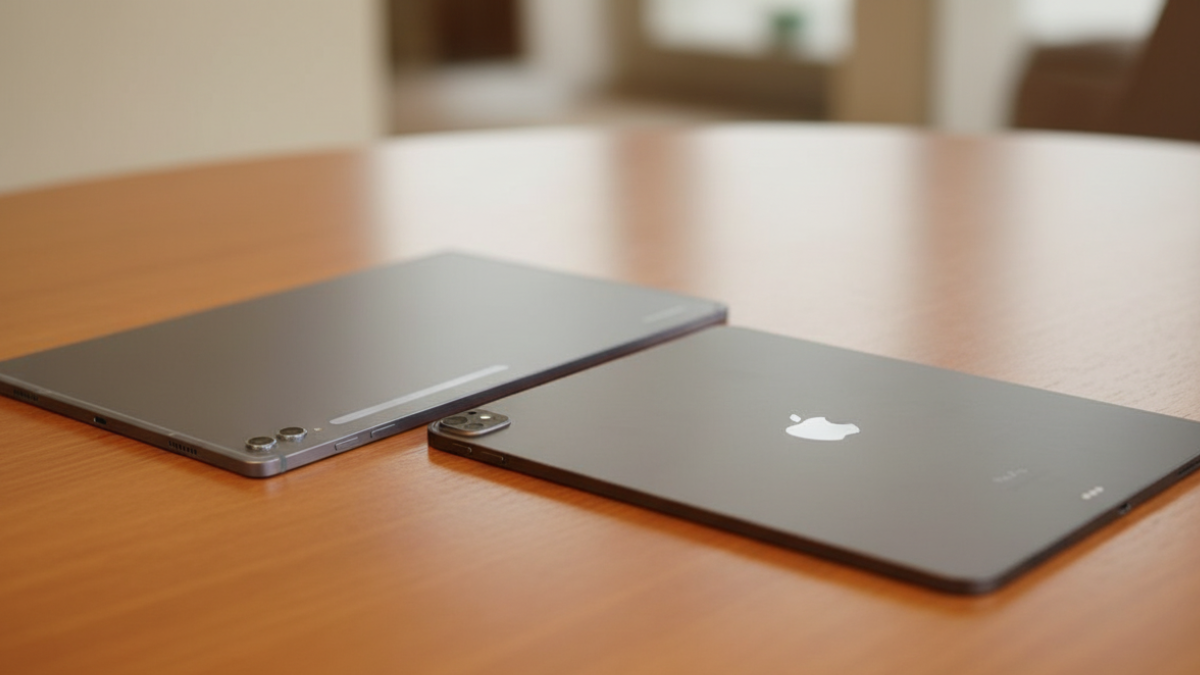
I compared the Tandem OLED on the iPad Pro M5 against the standard AMOLED on the Galaxy Tab S10 Ultra. Here is the harsh truth about screen burn-in and tablet longevity in 2026.

Introduction
Whenever a tech company releases a tablet that costs north of $1,200, they want you to focus on the immediate “wow” factor. They crank the brightness to maximum, put on a 4K HDR nature video, and hope you hand over your credit card before asking the most important question in mobile technology: What is this screen going to look like in three years?
I am Ameer Hamza, and as someone who reviews dozens of smartphones devices every year, I can tell you that the smartphone and tablet industry has a dirty little secret. Organic Light-Emitting Diode (OLED) technology is beautiful, but it is fundamentally organic. That means it decays. And as of March 2026, the battle lines for display longevity have been drawn.

Apple has just launched the iPad Pro M5 featuring second-generation Tandem OLED technology, directly challenging Samsung’s massive 14.6-inch Galaxy Tab S10 Ultra and its traditional single-layer AMOLED display. If you are a digital artist, a video editor, or just a power user making a long-term investment, you are about to see why physics is finally forcing Samsung into a corner.
The Chemistry of Burn-In: Why Large Screens Die
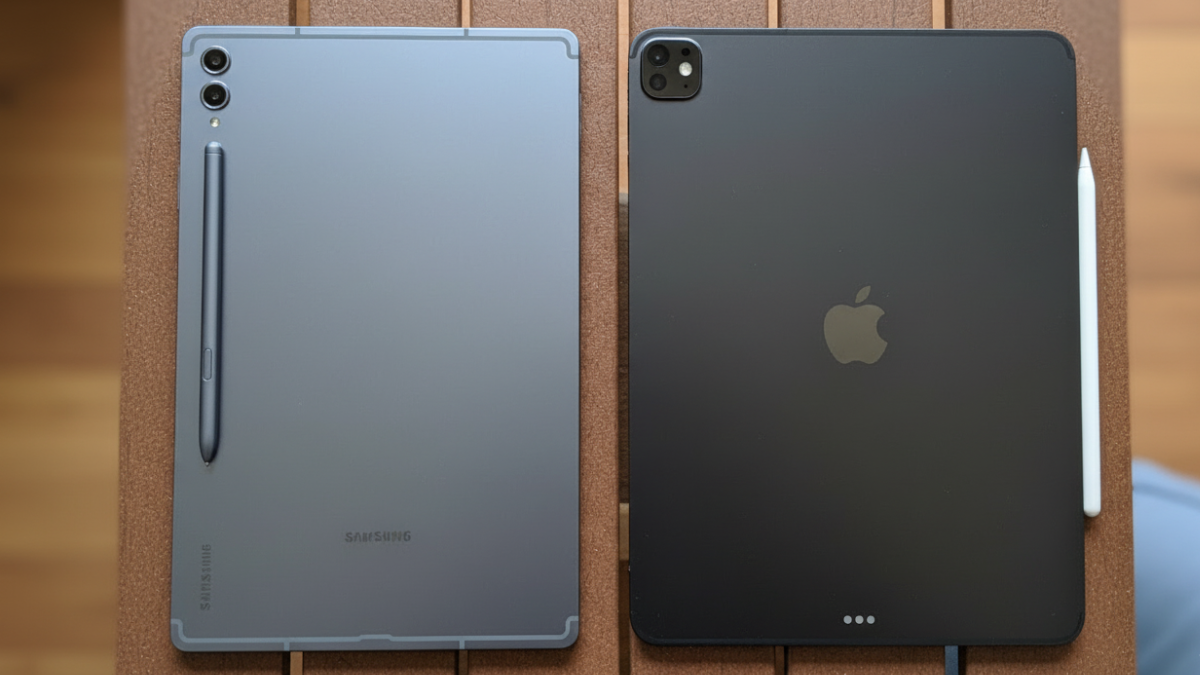
To understand the magnitude of Apple’s shift, you have to understand why screens degrade. Traditional OLED panels, like the stunning dynamic AMOLED 2X found on the Galaxy Tab S10 Ultra, use a single layer of light-emitting pixels.
When you push a single-layer OLED to extreme brightness—say, 1,500 nits while editing HDR video or working outside—those microscopic organic diodes generate immense heat.
Over time, static elements like your taskbar, your video timeline, or your battery icon permanently degrade the pixels displaying them. This leaves a permanent “ghost” image on the screen.
For a phone you replace every two years, it is a minor issue. For a $1,300 tablet designed to be a laptop replacement, it is a catastrophic flaw.
The Tandem OLED Revolution: Working Half as Hard
Apple realized that you cannot fight the physics of single-layer organic decay, so they changed the architecture entirely. The iPad Pro M5 utilizes Tandem OLED.
Instead of one layer of pixels screaming at maximum power, Tandem OLED stacks two separate light-emitting layers on top of each other. To achieve 1,000 nits of full-screen brightness, each layer only needs to output 500 nits.
The result is profound. Because the pixels are not being pushed to their thermal limits, the degradation curve virtually flattens. In accelerated aging tests conducted within the display industry in early 2026, Tandem OLED panels showed a lifespan up to four times longer than traditional single-layer AMOLEDs. Apple is essentially selling a screen that can comfortably last a decade without severe burn-in.
The Galaxy Tab S10 Ultra: Pushing Single-Layer to the Limit
Samsung is the undisputed king of manufacturing OLEDs, but with the Galaxy Tab S10 Ultra, they are still relying on traditional single-layer architecture. To combat the burn-in risk on a massive 14.6-inch canvas, Samsung relies heavily on aggressive software intervention.
The tablet uses background pixel-shifting, localized dimming of static logos, and aggressive thermal throttling. If you watch a bright HDR movie on the Tab S10 Ultra, you will notice the screen subtly dims after 15 to 20 minutes. This is not a bug; it is a survival mechanism. The software is artificially limiting your brightness to prevent the screen from destroying itself.
While the Tab S10 Ultra looks magnificent in a dark room, the moment you push it in a professional, high-brightness environment, you are accelerating its death.
Head-to-Head Display Specifications
| Display Metric | Apple iPad Pro M5 (13-inch) | Samsung Galaxy Tab S10 Ultra (14.6-inch) |
| Panel Technology | Dual-Layer Tandem OLED | Single-Layer Dynamic AMOLED 2X |
| Full Screen Brightness | 1,000 Nits (Sustained) | 600 Nits (Sustained before throttling) |
| Peak HDR Brightness | 1,600 Nits | 1,750 Nits (Short bursts only) |
| estimated Lifespan (Pre Burn-in) | 8 to 10 Years | 2 to 4 Years (Under heavy static use) |
| Power Consumption | Extremely High Efficiency | High (Requires large 11,200mAh battery) |
| Best Use Case | Long-term professional workflows | Media consumption and gaming |
Sustained Brightness vs. Peak Marketing
This brings us to the most deceptive specification in tech: Peak Brightness. Samsung heavily advertises the Tab S10 Ultra’s ability to hit 1,750 nits. However, that number only applies to a tiny 5% window of the screen for a few seconds during a specific HDR highlight (like an explosion in a movie).
When you need the entire screen to be bright—for example, when reviewing a PDF document outdoors or painting a bright canvas in an art app—the Samsung tablet quickly drops its brightness to protect the single-layer organic material.
The Apple iPad Pro M5, thanks to the two-layer structure, can hold 1,000 nits across the entire 13-inch display indefinitely. It does not heat up, it does not throttle, and it does not force you to squint after twenty minutes of work. It is a fundamental hardware advantage that software simply cannot replicate.
My Final Tip: Protect Your Investment
In 2026, the definition of “Pro” hardware is changing. It is no longer just about having the fastest processor or the thinnest chassis. True professional hardware needs to be reliable over the long haul.
If you are a casual user who upgrades every two years and primarily uses your tablet in bed to watch Netflix, the Samsung Galaxy Tab S10 Ultra is an absolute marvel. Its 14.6-inch size offers an unmatched cinematic experience, and in short bursts, the AMOLED screen is gorgeous.
However, if you are spending over a thousand dollars on a machine that you expect to use daily for drawing, editing, or office work over the next five to seven years, buying a single-layer OLED is a massive gamble.
The Apple iPad Pro M5 with Tandem OLED technology is not just brighter; it is practically bulletproof against the burn-in issues that have plagued large displays for a decade. Apple has solved the longevity problem, making Samsung’s current flagship tablet look alarmingly fragile by comparison.